Author: Julie Wilkinson

  • A Climate Justice Christmas

    A couple of weeks ago, a challenge fell into my lap – to retell the Christmas Story through a climate justice lens. I wasn’t sure where the story would take me; but I wanted to share it with you in the midst of the December hustle.

    So, take a few minutes out, find yourself a comfy spot, turn on the fairy lights, and listen to the stories of the angels…

    (The Climate Justice Nativity is an original story by Julie Wilkinson, written and performed for the 2019 Amos Trust Carol Service in Normanton, West Yorkshire)

  • Hold on…

    I see you.
    The stones in your shoes
    and the boulders at your back,
    which you carry in dignity
    and silence.

    I see
    the Herculean strength
    to rise each day
    and just exist
    while despair gnaws at your heels.

    I see
    the clenching, wrenching
    fear
    that beats at your heart,
    relentless.

    I see you,
    adrift
    in torrential storm-tossed seas
    that churn and crash
    and bruise and batter.

    I am here.

    I will walk
    in your wake
    and gather the stones
    and the bones as they fall
    silently to the floor.

    I will stand
    shoulder to shoulder
    and be alongside you
    with balm in my pocket
    for the wounds at your feet.

    I will sit
    with you in the dark
    and when you are ready
    I will light
    the smallest flame.

    I will dive
    into the water
    and ride the storm beside you
    with a life ring in my hand
    that I bring to give to you.

    I will love you
    when you cannot love yourself.

    You are not alone.
    You are worthy.
    You are loved.

    Hold on.

    (Julie Wilkinson, Storyteller, written on World Mental Health Day 2019)

  • On Empathy…

    Skara Brae 2

    Empathy. That’s where my thoughts have been. The power of real, deep heart-to-heart human connection.

    I spent some time on the Orkney islands in the summer. It was my first visit, fulfilling a soul-yearning for the area that I still don’t really understand. It’s a place that is rich in Neolithic history, the landscape literally stuffed full of five-thousand-year old human stories.

    We spent our first full day there visiting the archaeological dig at the Ness of Brodgar’s Open Day, the archaeologists on hand to explain the treasures they had found beneath our feet. And it was fascinating. How science, and care, and precision, and knowledge, and expertise, and the good old-fashioned hard graft of digging combined, enabling them to find and unearth and interpret the stories written into the ground, connecting humankind across thousands of years.

    And it was fascinating how an ancient community, even older than the pyramids, still had so many stories to tell, of how they lived and organised themselves, of extraordinary creativity and ingenuity, craftsmanship and artistry, society and shared living.

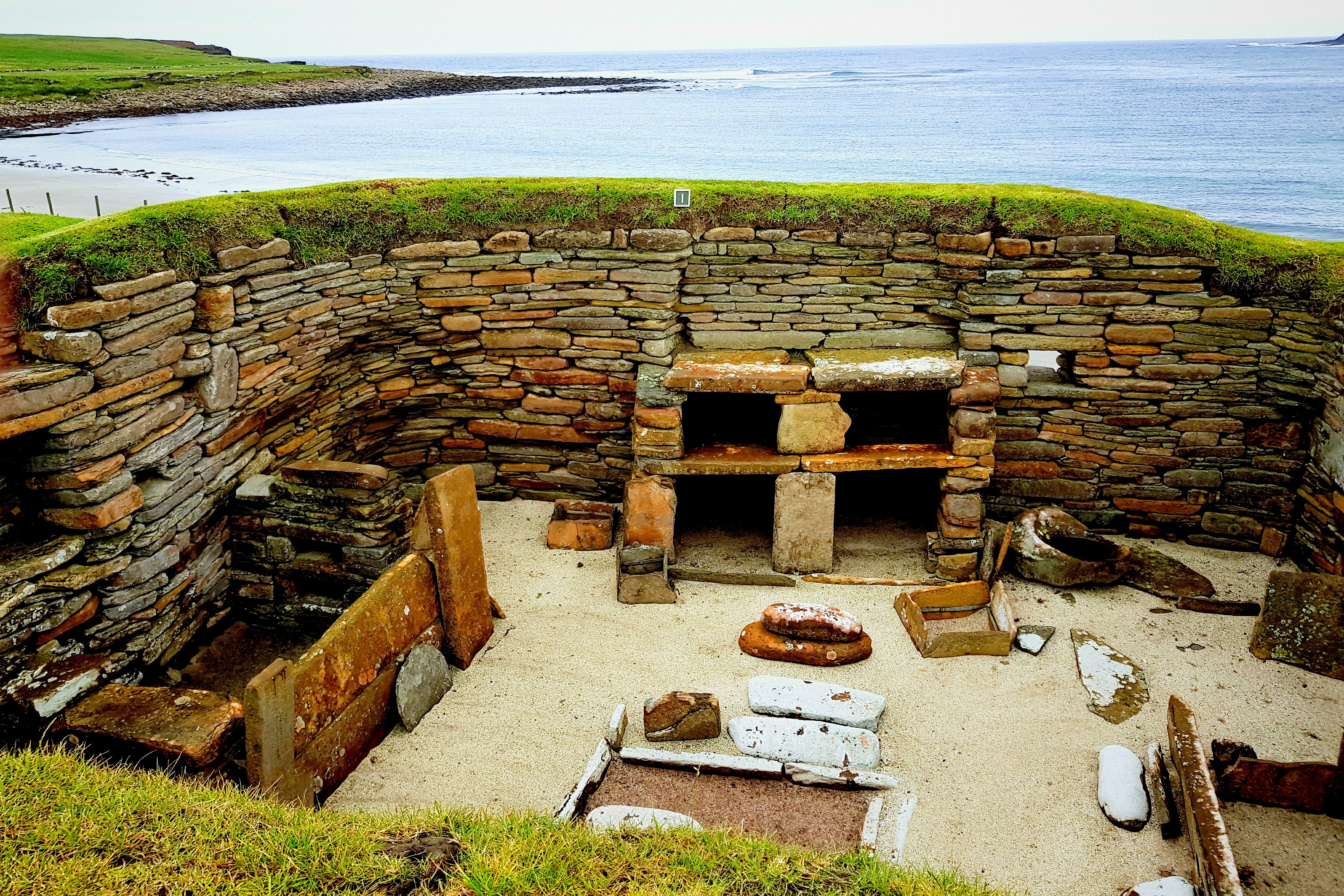
    As the week went on, we visited other five-thousand-year-old treasures. The chambered cairn of Maeshowe, engineered so its entrance was perfectly aligned with the light of the setting midwinter sun, and covered in runic graffiti, tagging the names of Viking invaders and their bawdy exploits. The standing stones at the Ring of Brodgar, built in line with the remains at the Ness and the cairn of Maeshowe, mysterious in their size and placement, hinting at Stone Age transport innovations and a shared communal spirituality. Skara Brae, the Neolithic settlement hidden beneath the sand dunes, uncovered by a nineteenth-century storm, revealing the perfectly-preserved secrets of our ancestors who lived there – a community who in all likelihood lived in family groups, gathering around a central hearth, sleeping in box beds, displaying their treasures on stone-built dressers. We saw the four-centimetre tall Westray Wife, the earliest known carving of a human form found in Scotland and one of only three such carvings found throughout the whole of the UK; a tiny stone person, with pin prick eyes, an M-shaped brow line, a possible nose and mouth below.

    And everywhere we went, there was human connection. Shared humanity. Shared values. Our Stone Age forebears were not primitive or inhuman; they were innovative and societal, craftspeople and artists, spiritual beings and master engineers, their monuments surviving for thousands of years.

    And it struck me time and again that the only reason we know all this, the only reason we can connect with them across millennia, is because of humans now – archaeologists, historians, volunteers and more – whose minds, hearts and souls yearn across the ages to connect with our forebears, to understand them. Empathy. Deep human connection.

    And it struck me that empathy, deep human connection – that is kingdom work. Jesus embodies empathy. He saw people, he read them, he understood. From the widow who gave all that she had, to the woman caught in adultery; from Zacchaeus in the tree, to his encounter with Judas at the Last Supper; in his response to Peter cutting off the soldier’s ear at his arrest, and in the way he allowed for the restoration of their relationship at the barbecue on the beach. He is all about empathy. That is at the heart of how he relates to people. When Mary and Martha sent for him as Lazarus lay dying, he delayed his journey – allowing for the greater miracle of resurrection, yes, but also for that short but well-known Bible verse. He wept. He allowed time to feel their deepest grief and loss alongside them. Empathy.

    In a world where so many of our political leaders choose to build a stance of unassailable power on bullying tactics and threats, on retribution and sanctions, it is empathy that is needed. Empathy is how we bridge the divide, geographically, culturally, spiritually, historically. Empathy is how we draw together across the division of values and beliefs. Empathy, built through shared stories and experience, founded on strong and sacrificial love for our fellow humans and our world.

    Shared humanity. Real, deep, heart-to-heart human connection. Hospitality and openness. Empathy.

    That is my choice. Join me?
  • World Book Day 2019

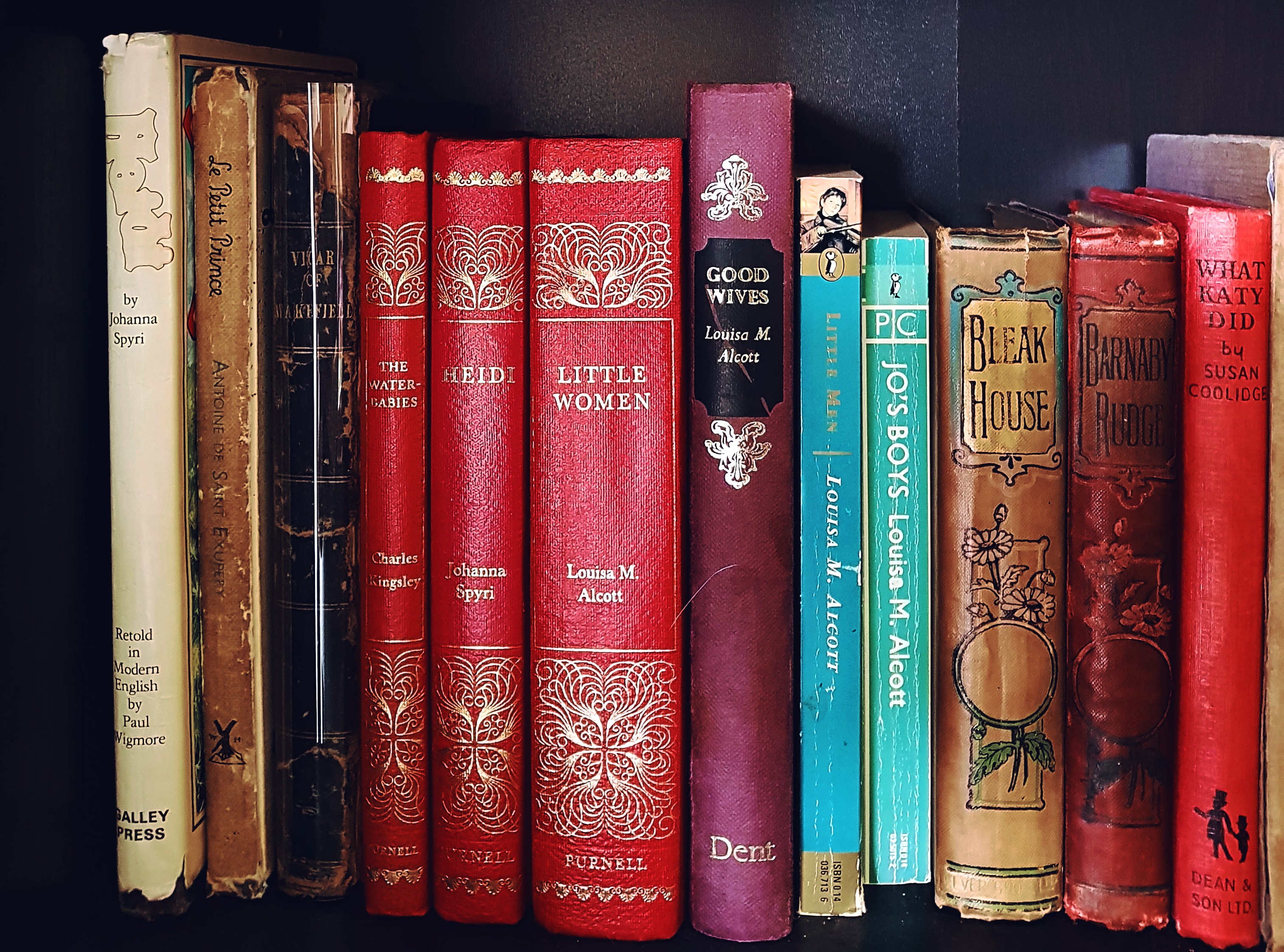
    Shelf

    My shelves are full of friends,
    Sitting back to back along the rows.
    Their spines recall the footprints
    They have printed on my soul.

    From the alcove,
    Heidi smiles,
    Sun-faded and familiar.
    Her pages are as old as I am.
    Every night for years,
    She told me how little girls
    Could be brave and change the world
    And be homesick all at once.

    Nearby, red leather and gilt letters
    Hold the March sisters.
    Meg, forsaking romance to build something far more real;
    Amy’s gaze slowly turning from itself.
    Beth, whose light touch left a deep and lasting legacy;
    And Jo, who struggled with the world,
    And all of its injustice,
    Writing it out with ink-stained fingers.

    With my friends,
    I joined the circus,
    Sailed boats to secret islands,
    Fled the destruction of Farthing Wood,
    And the bombs of the London blitz.
    I heard the crunch of Narnia snow
    And tasted second breakfast.

    I am Hermione,
    Consuming the library one shelf at a time;
    I am Elizabeth Bennett,
    Fighting convention with razor-sharp wit;
    I am Matilda,
    Standing up against power misused and abused.
    I am Offred. And Tess Durbeyfield. And Hero.
    The voiceless given voice.

    Michelle Obama
    Took me to stand on the White House Lawn;
    Yusra Mardini
    Pulled me into the sea from a refugee boat.
    Emmeline Pankhurst
    Allowed me to march beside her;
    And Maya Angelou
    Taught me why the caged bird sings.

    Burglar Bill showed me the power of redemption,
    Dr Seuss how to fall in love with words;
    Lemony Snicket challenged the need for happy endings,
    And Pippi Longstocking laughed at the absurd.

    Every page turned,
    Every woven word,
    Every journey taken,
    Every story unfurled,
    Stitches into who we are,
    And who we want to be.

    Like Pi and Richard Parker, set adrift in their boat,
    We choose the stories we prefer.

    My shelves are full of friends,
    Sitting back to back along the rows.
    Old friends; new friends
    To leave footprints in my soul.

    Copyright © 2019 Julie Wilkinson


  • Love is…

    1539694282186

    Love is fierce.

    Love is strong.

    It cowers, and bends, and withstands crushing pressure; it folds in on itself.

    Love clings, love grips, love hangs on in the storm.

    It looks for the spark of light when there is none.

    Love knows when it is not enough. It seeks unceasingly for the scaffolding to shore it up.

    Love weeps.

    Love mourns.

    It sacrifices itself again and again.

    Love is steel.

    It digs in deep. It bides its time. It burns slowly into bloom.

    Love survives.

  • Boris and the Burka

    Boris and the Burka

    20180809_133457.jpgAs a writer, I know that words hold power. And I know that I hold power in the choices I make about how to use them.
    Writers do not choose their words recklessly; they do so with intent. Which is why Boris Johnson’s recent comments on the burka, in an article he wrote for the Daily Telegraph, must be called out.

    As an experienced politician and journalist, Johnson treads a fine linguistic line. Check out his article online and the headline moderates the content – “Yes, the burka is oppressive and ridiculous – but that’s still no reason to ban it.” Islamophobic? Well, he can’t be, can he? It’s not like he wants it BANNED!

    But maybe the controversy isn’t over whether Boris is Islamophobic. Maybe the point of real concern is over how a senior politician in the UK chooses to use language in the public sphere to stoke fear, division and discontent, to serve his own political purposes.

    Take a second to look at the language he uses – the burka is “oppressive and ridiculous”, dangerous and laughable all at the same time, feeding fear and stoking disdain for a cultural minority while attempting to make himself seem perfectly reasonable.

    I know Johnson probably didn’t write his own headline. But it’s not the headline that has caught the media, and consequently the public, attention. It’s the content of the article, comparing the burka to “a bank robber” and “a letterbox”. Same effect. It is both dangerous and laughable, all at the same time. Feeding fear and stoking disdain.

    Truth be told, they’re not great similes – they don’t stack up. People in burkas look like bank robbers? When did you last see any news coverage of a bank robbery involving a thief in a burka? A quick internet trawl throws up just one example of an attempted bank robbery in the UK by a man in a burka, in Oadby in 2015 . No one was injured and nothing got stolen. The incident is briefly referenced in this 2017 Channel 4 Factcheck article, published in response to UKIP’s policy to ban the burka due to the “increased security threat”. The Factcheck finds no statistical evidence to support the idea that burkas are a security risk and quotes a former officer from Scotland Yard’s Anti-Terrorist Squad, David Videcette: “I don’t think that UKIP are right in suggesting that the burqa is a security issue, because I don’t think it is.”

    And letterboxes? Well UK letterboxes tend to be red, whereas burkas are usually black. You could argue that the soldiers who stand outside Buckingham Palace in their red uniforms bear more resemblance to a letterbox than a woman in a burka. But it’s a carefully chosen image by Boris. Rooted in ridicule – ‘look at them, how ridiculous they are, like walking postboxes!’ – while drawing attention to the slit where the eyes of the wearer can be seen (which is the only point on which any comparison between the burka and a letterbox can be made, as far as I can see). Clever by Boris, because while making people laugh at this ridiculous garment, he feeds back into the image of the covered face, the hidden identity, injecting the fear with a second, subconscious, shot.

    And the media coverage picks up Johnson’s jovial, funny comparisons and social media comes alive with people repeating them, sharing in the ridicule of the women who choose to wear them, sharing in the disdain of the culture they assume is behind them, sharing their fears which have been legitimized and stoked by a senior politician with no attempt at rationality or reassurance.

    And women wearing burkas and niqabs and hijabs on our streets increasingly become targets for fear-fuelled racist abuse, targets for verbal and physical attacks because of the clothes they are wearing. They become the clothes they wear – they are oppressed and ridiculous, because Boris says so, we say so, without asking them or hearing their voices.

    Of course, Boris took a punt and aligned his political career with the success of Brexit. Public support for Brexit rests on fear of the other, inter-cultural suspicion. In the wake of recent media coverage on the potential catastrophic effects of a No-Deal Brexit, an experienced journalist and senior Brexit-aligned politician writes an article stoking up fear and ridicule of a cultural minority, feeding public opinion.

    As a writer, Boris knows that words hold power. And he knows that he holds power in the choices he makes about how to use them. Apologise for his words? I suspect they’re working exactly the way he intended them to…

  • The Rolling Ocean

    FreeImages.com/tatlin
    FreeImages.com/tatlin

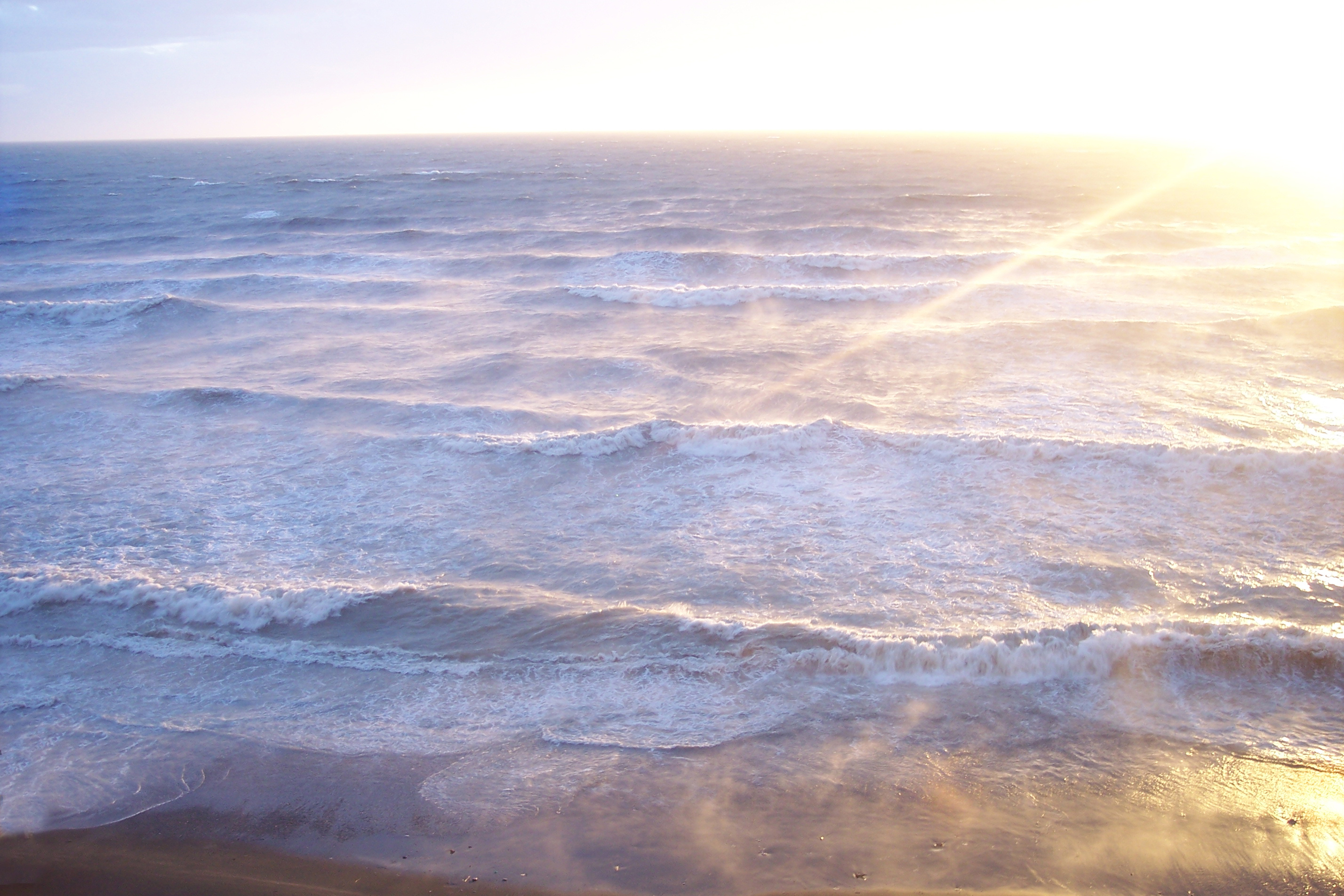
    A couple of days ago, a simple five-word status rolled past in my Facebook memories. Just five words. Five words that, in a single instant, transported me back and held me in the now and stretched boundlessly into the future, all at the same time.

    Those five words took me back to a moment suspended between the approval of the adoption panel and the introductions that would bring our first child home. An ending and a beginning, all at the same time.

    We’d spent the evening with friends, hearing the story of St Brendan and his legendary voyage. A monk with a yearning for the ocean and a heart that beat to the crashing of the waves. A man whose God called him over the horizon, into the unknown, with a ragtag team of sailors and a wood-and-leather coracle, bound together with flax and a trust in the promised land.

    Encounters with sea monsters. Gazing on the briny wonders of the deep. Forcing the oars through treacle-thick waters. Oasis moments on serendipitous islands. The scourging onslaught of the storm. The pitch and the swell and the roll of the sea. Finding the Promised Land. A return home.

    As the story ended, I found myself back at the beginning. Standing with Brendan on the shore, solid, dependable, grounded. Yet the sand was already shifting beneath my feet, the whisper of the horizon was curling in my ear.

    “Come. Set sail. Trust in the rolling ocean.”

    In my other ear, doubt uncoiled and gripped.

    “Do you have what it takes? Are you sure? Can you reef the mainsail, steady the helm, steer safely when the waves rise and the current takes you? Can you protect a small passenger from the raging tumult, hold them fast in the tempest unleashed? Do you even know how to sail?

    I didn’t know how to sail.

    But the sands had already drifted and my feet were doused in the surf. So I made my choice. I got into the boat.

    Years later and I still don’t know all the secrets of sailing. Our coracle is bound together with fierce love and abiding hope. It is storm-beaten, scarred, broken and mended. It carries four passengers now. Together, we encounter monsters, gaze on the beauty and the wonder of the deep, force our way through treacle-thick waters, find moments of oasis, and survive, and survive, through the scourging of the storms.

    We haven’t found our Promised Land. But I suspect it is closer than we think, slowly unwinding through the act of sailing itself.

    My soul is made of homespun comfort, an unassuming tapestry of cosiness and safety, rooted, anchored. But my heart felt a yearning for the ocean, beat with the crashing of the waves. And now the boat is where I belong.

    Then. And now. And in the future.

    Trust in the rolling ocean.


    “Trust in the rolling ocean” is a lyric from a song written for the Darwin Song Project, put together by Shrewsbury Folk Festival in 2009, bringing eight folk artists together to write and record songs inspired by the story of Charles Darwin. As I doubted myself after hearing Brendan’s story all those years ago, the lyrics came into my head. The song has stayed with me ever since, an anthem to our family’s journey.

    https://www.musixmatch.com/lyrics/Darwin-Song-Project/Trust-in-the-Rolling-Ocean

  • We went in search of you…

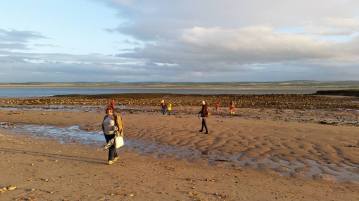
    IMG_3565We went in search of you,
    Wild and elemental,
    At home in the storm,
    With feet that walk waves.

    And we found you.
    In sand-blasted skin
    And salt-tanged lips,
    In sun-beaten cheeks
    And sea-sprayed hair,
    In briny-deep swell
    And wood-sweet smoke.
    In grit between our teeth.

    IMG_3683

    We went in search of you,
    Spirit and creator,
    Bidder of oceans,
    Wilderness wanderer.

    And we found you.
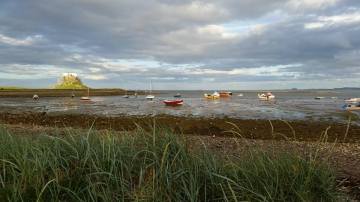
    In swallows’ nest
    And rock-pool weed,
    In basking seals
    And pebble beach,
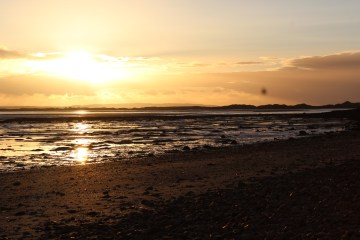
    In wide expanse
    And sinking-sun glow.
    In puffin’s clumsy gait.

    19399003_10154429649171805_4509297819737855616_n

    We went in search of you,
    Incarnate and relational,
    Caller of all
    To hallowed community.

    And we found you.
    In a bunkhouse
    And in love that held our children,
    In the arms of beach-met friends
    And in nights of gin-soaked laughter
    Carrying us past the stars to first light’s dawn,
    In broken bread and sun-warmed wine.
    In gathering around the table.

    19400054_10154429645781805_4156806894185150538_n

    We went in search of you,
    Threaded through history,
    Eternally present,
    Holder of time.

    And we found you
    In your story
    And in ours,
    In a beach breakfast barbecue
    That echoed through time,
    In Cuthbert’s eyes and hands and feet
    And centuries-stretched shadow.
    In memories shared and memories made.

    IMG_3623

    We went in search of you.
    And we found you.
    Wild and elemental.
    Spirit and creator.
    Incarnate and relational.
    Threaded through history.

    We went in search of you.
    And we found you.


  • Twin Chords

    DSCF2376

    Imagine that, at the core of every human soul, there is a single shining golden strand. And in that strand is everything that makes a person who they are. And every time a person encounters love, their strand strengthens, glows, grows brighter in its shining.

    Some strands may be tall and straight and strong, others elegantly twisting and gossamer-thin, but this one thing they all hold in common – they are the essence of a person, full of glorious wonder, a well of potential waiting to be explored, fulfilled, celebrated.

    But as each strand is nourished by love, so other strands will grow alongside them. For wherever there is love, loss inevitably follows, for love and loss walk hand in hand. And every time a person encounters loss, a darker strand grows and curls around the golden core, snaking its way upwards, a lace overlay of shadows.

    And sometimes a loss comes that is so full and violent and devastating and traumatic, that the darker strand quickens at a rush and the person cannot remember how to find themselves underneath it.

    And when such devastating loss engulfs a core which has not first been nurtured by love and care, then the person may lose their ability to see their gleam altogether and, if they do catch a glimpse of it now and then, it is certainly not to be trusted.

    These twin chords of love and loss stretch at the centre of our family. And, together, our task, through intensive love and care and nurture, is to help one another see that the golden gleam can shine more brightly among the shadows. That the darker strands can be accepted as part of who we are because love and loss entwined have a beauty and a courage all their own.

    In a world that all too often thirsts and seeks for the holy grail of pure, unadulterated happiness, this can be a difficult truth to embrace. But every now and then, the clouds part, the shadows recede, the golden glow shines strongly through the latticework of loss and it is exquisite.

    It happened this weekend. Music is something of a lynchpin for us. As words people, we gather lyrics that chime with our experience, singing them at the top of our lungs, often in the car.

    Our latest acquisition (by Robbie Williams) starts with these words – and hearing them sung and claimed and owned yesterday by a voice that I love is some of the sweetest music I’ve ever heard:

    Tether your soul to me
    I will never let go completely
    One day your hands will be
    Strong enough to hold me

    I might not be there for all your battles
    But you’ll win them eventually
    I’ll pray that I’m giving you all that matters
    So one day you’ll say to me:

    I love my life
    I am powerful
    I am beautiful
    I am free
    I love my life
    I am wonderful
    I am magical
    I am me
    I love my life

    (songwriters: John McDaid, Robert Peter Williams, Gary Go
    published by: lyrics © Kobalt Music Publishing Ltd)

  • The Fear

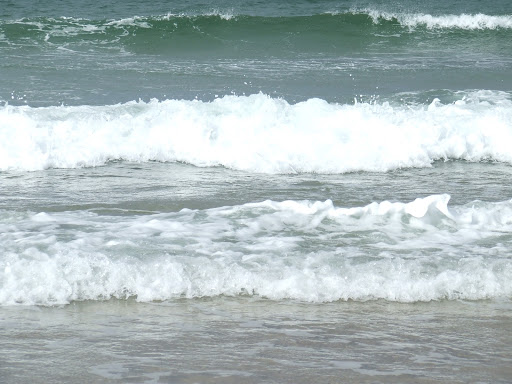
    The fear comes as waves. One small surge after another nudging her slowly out of her depth until she is treading water and she knows. The fear is no longer just around her and above her, it is beneath her, rolling and reeling. The tentative solid ground she held is still there, but too far away, she cannot reach it. She tries to keep calm. She can do this. She has done it before. She can tread water, she is strong, she can last until the solid ground comes back within reach. But each second, each minute, each hour of treading water is draining and exhausting. And the fear surrounds her, rushing and billowing. At first, it rocks her and the feeling is familiar and the familiarity deceives her because she has been here before and she knows what to do, she has well-worn strategies for fighting the fear. And so she surrenders to the old familiar rocking and it pulls her off course until she cannot remember which way she is facing and she cannot remember the solid ground that is way, way beneath her. The swell pitches and reels, pulling her this way and that way, until her head is spinning and her body is thrown. And then the fear rises underneath her, propelling her toward the sky, further away from solid ground, and the rocking becomes violent and unpredictable, plunging and pitching her around, and she is drowning in the fear and it is stronger than she is. And as it takes her, masters her, her control slips and she falls back on base instinct, throwing every ounce of her small strong body into survival, a wild, unchecked fight, trusting no one and nothing, not even herself. She is riding the waves because she has no choice and she knows they could crash, overwhelm her at any moment.

    There is someone riding the waves with her. She is aware of them. They hold an orange life ring. Sometimes the deluge brings her closer to them and they push the circular object towards her. She won’t take it. Like the initial familiar rocking of the waves, it is a trick, offering false reassurance so she will stop fighting and be lost. Everything is at stake. And she fights the ring and the person too, throwing everything she has at them and more.

    The fear is deep and lurching now, crashing in enormous waves all around her. Panic swirls and eddies through the current. Terror winds itself around her limbs, hauling, dragging her down. She reaches out, hands graze rubber. The life ring. Iron fingers grip because she has no choice. She gives herself up to the waves and, with each passing moment, her trust in the orange object increases. She opens her eyes. Her co-swimmer is there, holding fast to the other side. She thinks they are pulling against the prevailing tide. She doesn’t know where they get their strength from. The violent dizzying waters begin to recede, slowly becoming a more gentle bob. They float there, together.

    She is spent, exhausted, every particle of fight drawn from her and washed away. She feels the life ring dip and move. Arms reach out and hold her tenderly. She sinks into them, lets them take her weight. They carry her, gently. She becomes aware that the feet of this person are planted on solid ground once more. They sit in the shallows. The waves lap around them. They are drenched in fear but it is no longer ascending. They both know that it will come again, that they will repeat this feat of endurance as many times as it takes.

    But for now, they sit. She is held. She is safe. She closes her eyes. The wind strokes her face. And for a time, she sleeps. 


    The Fear