Tag: Faith

  • The Tale of the Determined Squirrel…

    Since the beginning of the pandemic last March, I’ve had far more opportunity than normal to notice the wildlife in our garden. Over this now-more-than twelvemonth span, I’ve been drawn into the dramatic arc of daily life lived by the birds, small mammals and occasional amphibians that share the space I used to think of as ‘mine’, and now think of as ‘ours’.

    I’ve noticed the passers-through and the regular visitors, those who travel in pairs and those who come alone, the early risers and the night owls, those who flaunt their vibrant colours in the full-on flare of the midday sun. I’ve witnessed courtship rituals, the nurture of fledglings, the full-on panic of immediate threat to life, the sadness and the stillness of a life cut short. It is compelling.

    And this small, half-turfed, ordinary space has revealed itself to be a rich tapestry of tales I never knew were there.

    Like that of The Determined Squirrel…

    *****************************************

    I know some people who prefer to squirrel-proof their bird feeders, but I’m a big fan of the feather-free furball foragers who frequent our hanging café. Anyone who displays that much dedication to getting their hands on their food deserves nothing short of admiration and respect!
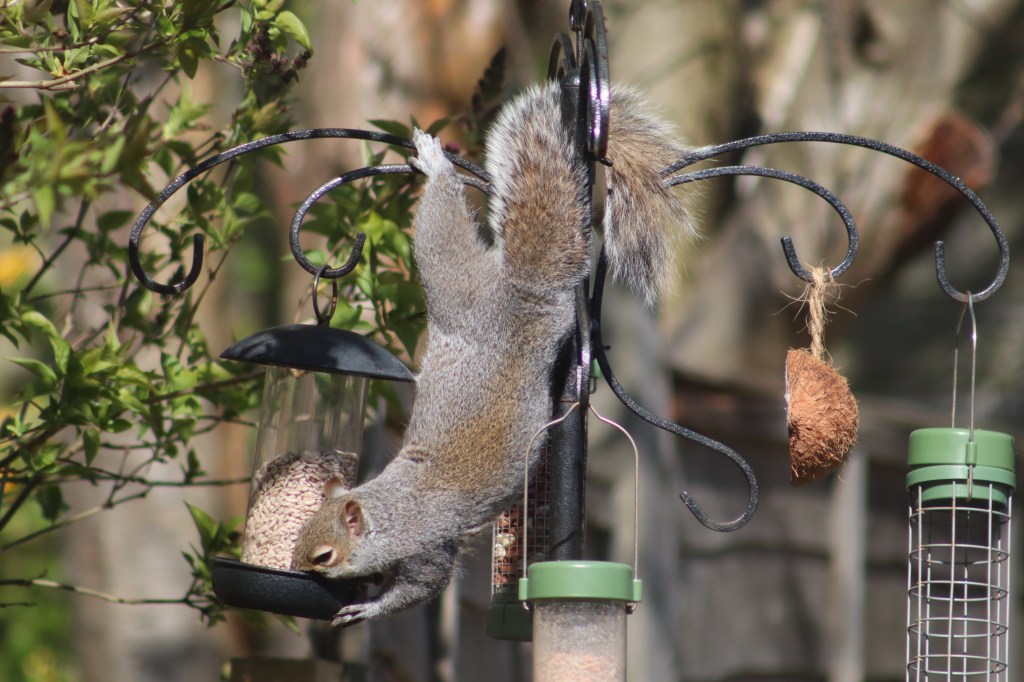
    Image © Julie Wilkinson 2021

    I’ve spent hours at my laptop with one eye on the squirrels – running along fences, acrobatically pilfering the bird feeders, and digging up the spoils they had stashed in my lawn. One day, I was in my kitchen when a familiar flash of grey fur flickered through the corner of my eye…

    That flash of fur was a squirrel, scampering down the bird feeder – by the time I looked up, it had settled itself in the grass below, right next to the cage feeder that was half-full of peanuts. It had just succeeded in knocking it off its hook, onto the floor, and looked mightily pleased with its endeavour!

    Dislodging the feeder to eat from it in a more comfortable fashion was not, however, the end goal. As I watched, like something from a cartoon, the squirrel proceeded to try everything it could to lift the entire feeder up off the ground, small furry arms stretched comedically wide, as it attempted to stagger off with the Holy Grail of peanut hoards.

    The squirrel was unbelievably determined. It tried everything. Lifting, carrying, pushing, pulling. At one point, it ran up the nearby fence post and sat atop the wood, surveying the situation from a height to see if it could come up with a better plan.
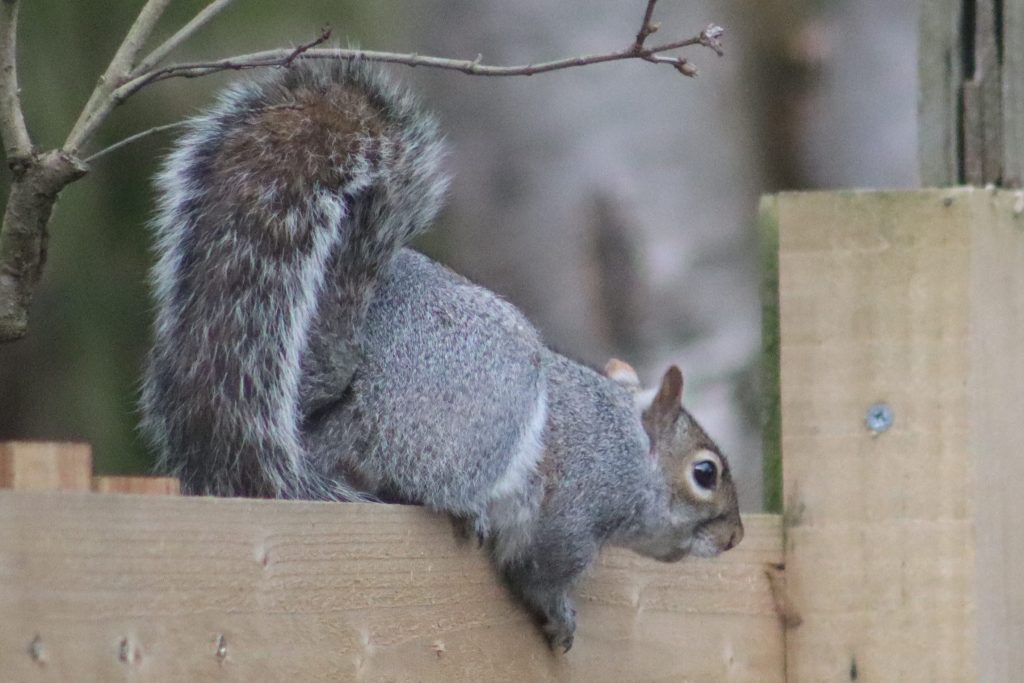
    Image © Julie Wilkinson 2021

    After several dogged minutes, circumstances forced it to change tack. Its efforts to steal the entire feeder and its contents resulted in the lid being dislodged and the peanuts spilling out everywhere. By the time we went out later to refill and rehang it, there were no peanuts left – some gobbled up, no doubt, by the opportunistic pigeons, but most, I suspect, taken and stashed for later by that stubborn little squirrel. And bravo to him, I say!

    *****************************************

    In Genesis 32, there’s a story about Jacob wrestling with God. Facing reunion with the brother he’d cheated out of his heritage, and fearing retribution, Jacob places his wives, children and servants in safety across the river, and returns to spend the night alone. He spends the dark hours wrestling with a man until the sun comes up. The man, seeing he cannot win, strikes Jacob on the hip, putting it out of joint, then asks Jacob to let him go.

    “I will let go of you,” replies Jacob. “If you bless me.”

    And so the man blesses him, saying, “You will no longer be called Jacob; from now on, you will be called Israel, because you have wrestled with God and with people, and you have won.”

    Jacob asks the man who he is, but he refuses to reply. So Jacob names that place Peniel saying, “I have seen God face to face, but my life was saved.”

    *****************************************

    Sometimes, when we’re faced with a problem that refuses to be solved, when things become intractable, when we can’t see how God will lead us through, or we’re trying to ignore his prodding to do something we don’t want to do to solve things, we can feel like Jacob. Like him, we are hanging on for dear life with no end in sight, clinging with faith to a God who has become both our assailant and our life belt.

    When that happens, we need to cling on with all the stubborn determination of a squirrel who refuses to give up wrestling a stash of peanuts he can never carry; we need to cling on with all the audacity of a man who, faced with God himself, cried out, “I won’t let go until you bless me!”

    When God left Jacob, he left him changed; the strike on his hip caused him to limp away from their encounter. Wrestling with God, holding on for his blessing, cannot leave us unchanged. There is a price to be paid; seeking God’s heart makes its mark, such an encounter will leave us challenged – and that can be uncomfortable. But it is a price worth paying…

    May your days be blessed – and if they’re not, hang on, the blessing will come!
  • On Empathy…

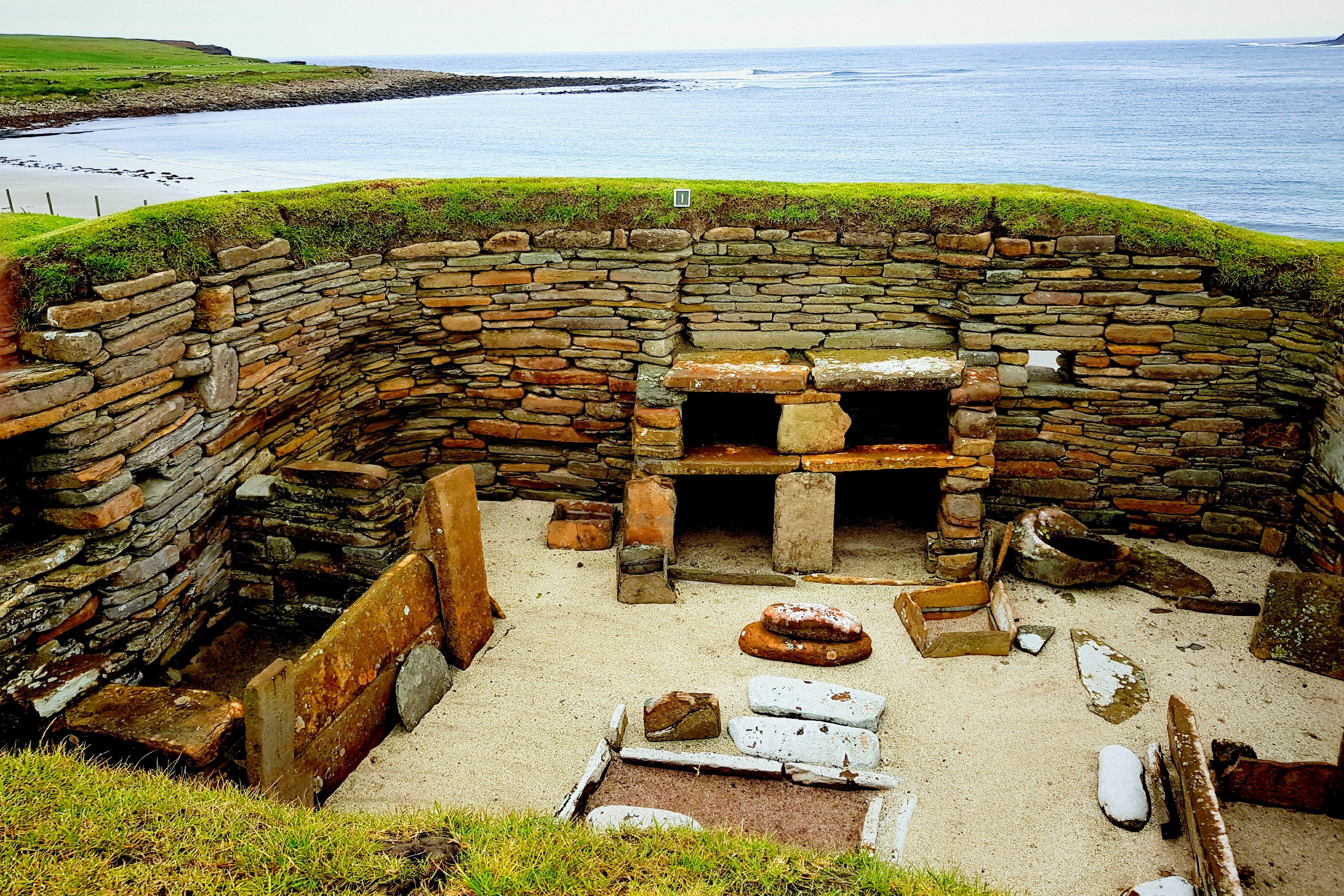
    Skara Brae 2

    Empathy. That’s where my thoughts have been. The power of real, deep heart-to-heart human connection.

    I spent some time on the Orkney islands in the summer. It was my first visit, fulfilling a soul-yearning for the area that I still don’t really understand. It’s a place that is rich in Neolithic history, the landscape literally stuffed full of five-thousand-year old human stories.

    We spent our first full day there visiting the archaeological dig at the Ness of Brodgar’s Open Day, the archaeologists on hand to explain the treasures they had found beneath our feet. And it was fascinating. How science, and care, and precision, and knowledge, and expertise, and the good old-fashioned hard graft of digging combined, enabling them to find and unearth and interpret the stories written into the ground, connecting humankind across thousands of years.

    And it was fascinating how an ancient community, even older than the pyramids, still had so many stories to tell, of how they lived and organised themselves, of extraordinary creativity and ingenuity, craftsmanship and artistry, society and shared living.

    As the week went on, we visited other five-thousand-year-old treasures. The chambered cairn of Maeshowe, engineered so its entrance was perfectly aligned with the light of the setting midwinter sun, and covered in runic graffiti, tagging the names of Viking invaders and their bawdy exploits. The standing stones at the Ring of Brodgar, built in line with the remains at the Ness and the cairn of Maeshowe, mysterious in their size and placement, hinting at Stone Age transport innovations and a shared communal spirituality. Skara Brae, the Neolithic settlement hidden beneath the sand dunes, uncovered by a nineteenth-century storm, revealing the perfectly-preserved secrets of our ancestors who lived there – a community who in all likelihood lived in family groups, gathering around a central hearth, sleeping in box beds, displaying their treasures on stone-built dressers. We saw the four-centimetre tall Westray Wife, the earliest known carving of a human form found in Scotland and one of only three such carvings found throughout the whole of the UK; a tiny stone person, with pin prick eyes, an M-shaped brow line, a possible nose and mouth below.

    And everywhere we went, there was human connection. Shared humanity. Shared values. Our Stone Age forebears were not primitive or inhuman; they were innovative and societal, craftspeople and artists, spiritual beings and master engineers, their monuments surviving for thousands of years.

    And it struck me time and again that the only reason we know all this, the only reason we can connect with them across millennia, is because of humans now – archaeologists, historians, volunteers and more – whose minds, hearts and souls yearn across the ages to connect with our forebears, to understand them. Empathy. Deep human connection.

    And it struck me that empathy, deep human connection – that is kingdom work. Jesus embodies empathy. He saw people, he read them, he understood. From the widow who gave all that she had, to the woman caught in adultery; from Zacchaeus in the tree, to his encounter with Judas at the Last Supper; in his response to Peter cutting off the soldier’s ear at his arrest, and in the way he allowed for the restoration of their relationship at the barbecue on the beach. He is all about empathy. That is at the heart of how he relates to people. When Mary and Martha sent for him as Lazarus lay dying, he delayed his journey – allowing for the greater miracle of resurrection, yes, but also for that short but well-known Bible verse. He wept. He allowed time to feel their deepest grief and loss alongside them. Empathy.

    In a world where so many of our political leaders choose to build a stance of unassailable power on bullying tactics and threats, on retribution and sanctions, it is empathy that is needed. Empathy is how we bridge the divide, geographically, culturally, spiritually, historically. Empathy is how we draw together across the division of values and beliefs. Empathy, built through shared stories and experience, founded on strong and sacrificial love for our fellow humans and our world.

    Shared humanity. Real, deep, heart-to-heart human connection. Hospitality and openness. Empathy.

    That is my choice. Join me?

  • Love is…

    1539694282186

    Love is fierce.

    Love is strong.

    It cowers, and bends, and withstands crushing pressure; it folds in on itself.

    Love clings, love grips, love hangs on in the storm.

    It looks for the spark of light when there is none.

    Love knows when it is not enough. It seeks unceasingly for the scaffolding to shore it up.

    Love weeps.

    Love mourns.

    It sacrifices itself again and again.

    Love is steel.

    It digs in deep. It bides its time. It burns slowly into bloom.

    Love survives.

  • The Rolling Ocean

    FreeImages.com/tatlin
    FreeImages.com/tatlin

    A couple of days ago, a simple five-word status rolled past in my Facebook memories. Just five words. Five words that, in a single instant, transported me back and held me in the now and stretched boundlessly into the future, all at the same time.

    Those five words took me back to a moment suspended between the approval of the adoption panel and the introductions that would bring our first child home. An ending and a beginning, all at the same time.

    We’d spent the evening with friends, hearing the story of St Brendan and his legendary voyage. A monk with a yearning for the ocean and a heart that beat to the crashing of the waves. A man whose God called him over the horizon, into the unknown, with a ragtag team of sailors and a wood-and-leather coracle, bound together with flax and a trust in the promised land.

    Encounters with sea monsters. Gazing on the briny wonders of the deep. Forcing the oars through treacle-thick waters. Oasis moments on serendipitous islands. The scourging onslaught of the storm. The pitch and the swell and the roll of the sea. Finding the Promised Land. A return home.

    As the story ended, I found myself back at the beginning. Standing with Brendan on the shore, solid, dependable, grounded. Yet the sand was already shifting beneath my feet, the whisper of the horizon was curling in my ear.

    “Come. Set sail. Trust in the rolling ocean.”

    In my other ear, doubt uncoiled and gripped.

    “Do you have what it takes? Are you sure? Can you reef the mainsail, steady the helm, steer safely when the waves rise and the current takes you? Can you protect a small passenger from the raging tumult, hold them fast in the tempest unleashed? Do you even know how to sail?

    I didn’t know how to sail.

    But the sands had already drifted and my feet were doused in the surf. So I made my choice. I got into the boat.

    Years later and I still don’t know all the secrets of sailing. Our coracle is bound together with fierce love and abiding hope. It is storm-beaten, scarred, broken and mended. It carries four passengers now. Together, we encounter monsters, gaze on the beauty and the wonder of the deep, force our way through treacle-thick waters, find moments of oasis, and survive, and survive, through the scourging of the storms.

    We haven’t found our Promised Land. But I suspect it is closer than we think, slowly unwinding through the act of sailing itself.

    My soul is made of homespun comfort, an unassuming tapestry of cosiness and safety, rooted, anchored. But my heart felt a yearning for the ocean, beat with the crashing of the waves. And now the boat is where I belong.

    Then. And now. And in the future.

    Trust in the rolling ocean.


    “Trust in the rolling ocean” is a lyric from a song written for the Darwin Song Project, put together by Shrewsbury Folk Festival in 2009, bringing eight folk artists together to write and record songs inspired by the story of Charles Darwin. As I doubted myself after hearing Brendan’s story all those years ago, the lyrics came into my head. The song has stayed with me ever since, an anthem to our family’s journey.

    https://www.musixmatch.com/lyrics/Darwin-Song-Project/Trust-in-the-Rolling-Ocean

  • We went in search of you…

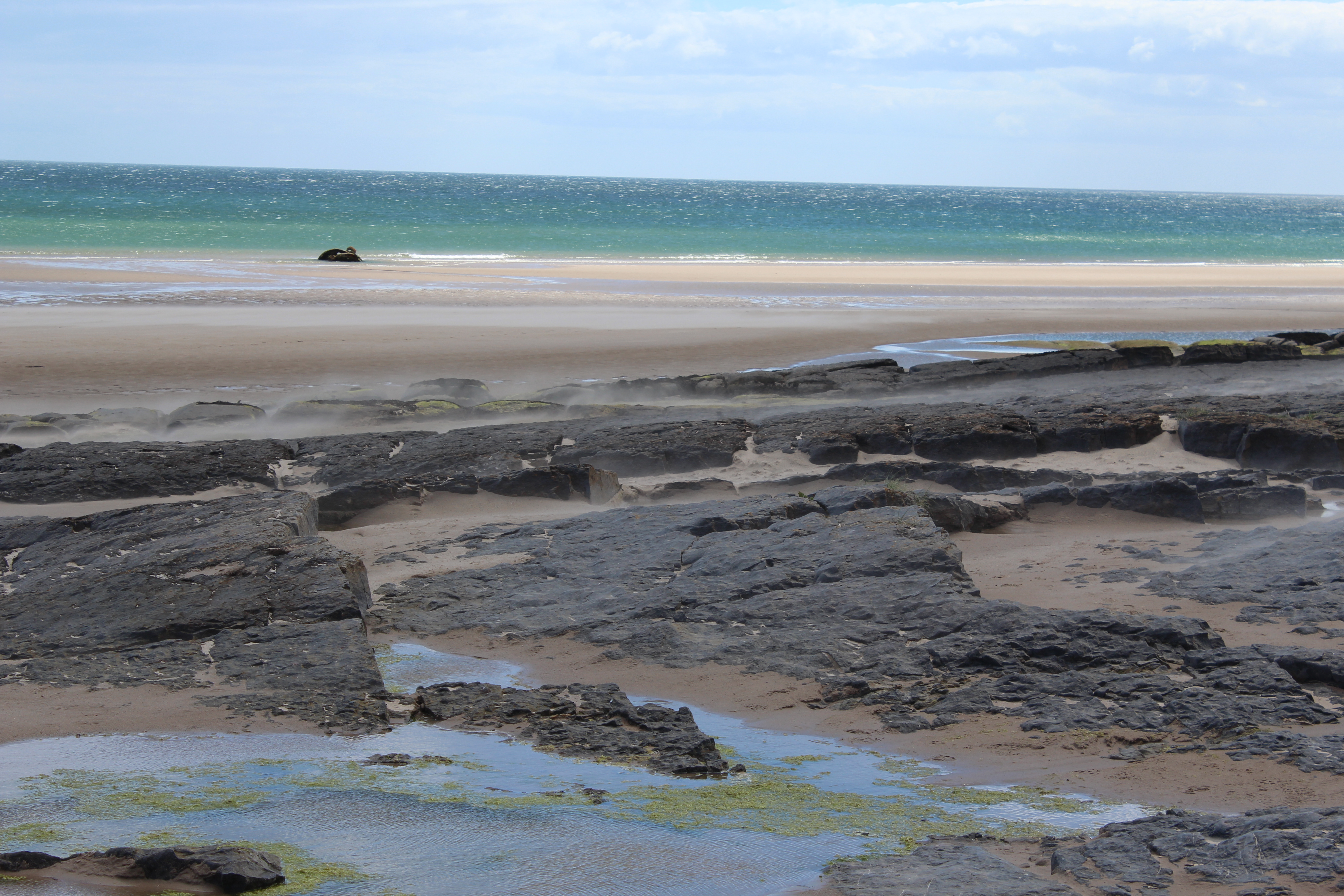
    IMG_3565We went in search of you,
    Wild and elemental,
    At home in the storm,
    With feet that walk waves.

    And we found you.
    In sand-blasted skin
    And salt-tanged lips,
    In sun-beaten cheeks
    And sea-sprayed hair,
    In briny-deep swell
    And wood-sweet smoke.
    In grit between our teeth.

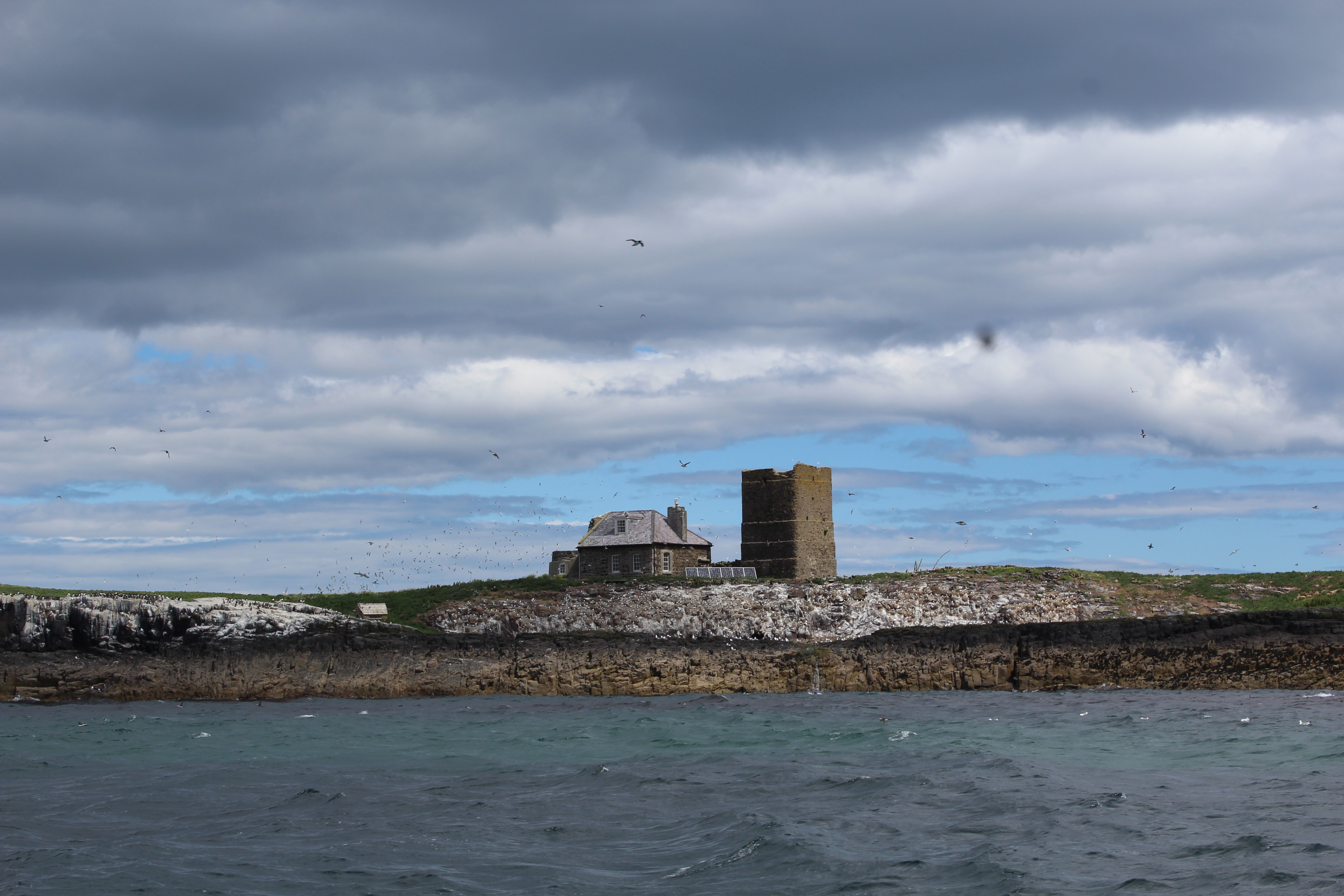
    IMG_3683

    We went in search of you,
    Spirit and creator,
    Bidder of oceans,
    Wilderness wanderer.

    And we found you.
    In swallows’ nest
    And rock-pool weed,
    In basking seals
    And pebble beach,
    In wide expanse
    And sinking-sun glow.
    In puffin’s clumsy gait.

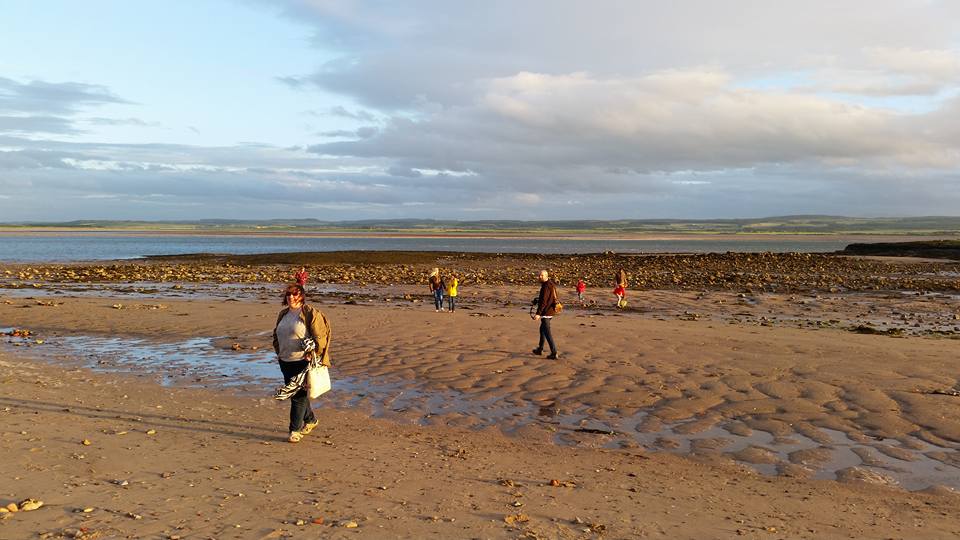
    19399003_10154429649171805_4509297819737855616_n

    We went in search of you,
    Incarnate and relational,
    Caller of all
    To hallowed community.

    And we found you.
    In a bunkhouse
    And in love that held our children,
    In the arms of beach-met friends
    And in nights of gin-soaked laughter
    Carrying us past the stars to first light’s dawn,
    In broken bread and sun-warmed wine.
    In gathering around the table.

    19400054_10154429645781805_4156806894185150538_n

    We went in search of you,
    Threaded through history,
    Eternally present,
    Holder of time.

    And we found you
    In your story
    And in ours,
    In a beach breakfast barbecue
    That echoed through time,
    In Cuthbert’s eyes and hands and feet
    And centuries-stretched shadow.
    In memories shared and memories made.

    IMG_3623

    We went in search of you.
    And we found you.
    Wild and elemental.
    Spirit and creator.
    Incarnate and relational.
    Threaded through history.

    We went in search of you.
    And we found you.


  • Found…

    ac17e-dscf3159Almost three years ago, we adopted our daughter and we love her to bits. Our family life is messy, imperfect, full of laughter, sometimes difficult, and beautiful. This week is National Adoption Week (5-11 November 2012) and this is the story I wrote for our little girl earlier this year to celebrate finding each other…


    There was once a little girl who found herself all alone in the world.

    I say all alone…

    There was the thing that she carried with her everywhere she went. It was a strange thing, she didn’t really know what it was, but she knew it was beautiful and she knew it belonged with her. Sometimes, when she looked at it, she felt like she could see everything that had ever happened to her. And sometimes, deep beneath, she caught a glimpse of something shimmering as it darted about, moving too fast to ever truly be seen.

    God watched the little girl everywhere she went. It was he who had put the shimmering light in the heart of the thing and, though she didn’t know it, he was always with her.

    The little girl often felt that there was something she ought to do with the thing, but try as she might, she could not work out what it was.

    And so she made her way through the world, carrying the thing with her wherever she went, seeking and searching for someone who could help her find the answer.

    Sometimes, on her travels, she met people who walked with her for a while and tried to help her in her quest. Some carried the thing for her but that never felt quite right. Some hid it from her where she couldn’t see it – but that felt even less right. Some sat and gazed at it with her, but that didn’t help either.

    Some of them walked beside her for miles, protecting the thing from the wind and the rain, sheltering it from the cold and the dark, and as they walked with her, she saw the shimmering light a little more often and sometimes it moved a little more slowly, as though it didn’t mind being seen. But still she didn’t know what the thing was for.

    Then one day, as she walked, she saw two people she’d never seen before, a man and a lady. As she looked closer, she saw that each of them carried a thing like hers, but there was something different about them. For although their things were separate and distinct, they were also joined together, they belonged to each other, they carried them together. She was curious and looked at them closely as she passed by. Their things were more beautiful together than hers was, on its own, but still something seemed to be missing from them.

    A few days later, she saw them again, then again, and again. She began to look for them as she walked, until one day she realised that they had seen her too. She stopped and looked and they stopped too. The thing in her hands hummed and buzzed a little. Then she turned and went on her way.

    As she walked, the thing continued to hum and to buzz, lightly and quietly at first, then stronger and louder. She stopped. Turned.

    And there they were. The man and the lady, just a few steps behind.

    Together, they lifted the things in their hands towards the little girl, and smiled. She looked at them, and stepped towards them.

    She lifted the thing that she had carried for so long towards theirs – and it was a perfect fit. At once, her hands felt lighter. She looked deep into the heart of the thing and there was the shimmering light, glowing steadily.

    Then God gave the light a little nudge and it moved next to the lights of the man and the lady.

    And the girl felt happy. And the man felt happy. And the lady felt happy. And God felt happy.

    Their three things together made a beautiful, imperfect whole.

    They smiled at each other, took one another’s hands, and began to dance through the world, and their lights danced too, sometimes dancing in perfect step with one another, sometimes dancing their own dance – but always knowing that they belonged together and that their lights would always guide them home.


    © 2012 Julie Wilkinson

  • Floating around…

    I led a discussion about Noah last night. I hadn’t planned to. My vicar was supposed to be doing it. Then he phoned an hour before people were due to arrive at my house. He wasn’t well – could we manage without him? Of course! He needed to rest. Not a problem. More than happy to lead it. And I was.

    Only, when I sat down to think about it, I didn’t think I had much to say about Noah. And I wasn’t sure how to help others find something to say about it either. It’s a story everyone knows. Could there really be anything new to say about it? So I read it. And all I could come up with was –
    “There’s not much of a journey in here – they just sort of float around a lot, don’t they?”
    Genius.
    But somehow, through the conversation and the different perspectives that each person brought, by the end of the evening, I had found a new way of seeing the story.
    It’s always been a tricky one, Noah. Here’s a story of God obliterating all life from the earth, apart from Noah, his family, the animals and birds on the boat, and the sea creatures. Every other living thing is destroyed. Why? Because it’s not good enough. The wickedness of creation is so extreme that God is sorry he ever made it. But a God with regrets means a God who got it wrong… And how does that work?
    It’s so easy to read this story with the traditional Sunday School spin – gloss over the harshly judgemental God who destroys everything, concentrate on Noah who is saved because he is good. If only we could all be good like Noah…
    We didn’t find an interpretation of the story that made us feel at peace with God’s actions. But we did find a way of understanding it as a story containing a glimmer of hope, echoes of the God and his relationship with the world that become so much clearer in Jesus.
    Because even here, in the midst of such wrath and judgement, God doesn’t destroy creation entirely. He doesn’t wipe it out. He offers the chance for redemption, a fresh start.
    This is a story that comes relatively soon after that of the fall, after the moment when God’s relationship with mankind is altered and broken. But not broken beyond hope. Noah isn’t ‘good’ because he piously observes laws or never gets anything wrong – he’s good because “he walked with God.” Somehow, despite the shattered relationship between God and humanity, Noah has discovered the same relationship with God that Adam and Eve enjoyed in the Garden of Eden.
    And when God chooses to save Noah and his family, maybe it isn’t as a reward for being better than everyone else. Maybe he saves Noah because he wants to work with him, he has a job for him to do. Noah must save the birds, the animals, and the crawling things from the flood, he must take food, containing seeds and fruit. Noah must take on the task that God originally gave to Adam and Eve. He must take care of creation, and its potential, during this darkest of times, so that when it is over, creation can be redeemed and start again.
    There’s a moment as the flood waters are going down when Noah, having sent the dove out to find dry land, sees it return, reaches out his hand, takes the bird and brings it back safely into the boat. It is because he walks closely with God that Noah walks closely with the creation that still, in its most broken and ugly form, bears the image of the creator who made it. Noah’s relationship with God means that he can hear God’s voice, follow it, and play his part in redeeming creation, in building God’s kingdom. It’s a pattern of relationship that follows through the rest of the Bible, through Abraham, and Joseph, and Moses, and Joshua – right through to Jesus himself.
    We talked too about whether the story of Noah is a factual account of events that really happened or some kind of allegory, a story to help us understand the relationship between God and the world at this time – and did it really matter which it might be?
    Stories are powerful not because they are true or because they are made up. It is because they invite us somewhere outside ourselves. What we can experience is limited by time, and space, who we are, where we are and when we are. But through stories our experience is broadened beyond our own world. When we enter into a story – whether on film, in a book, in the theatre, or through the spoken word – we enter into another world and experience those events through our imaginations, almost as if we were there.
    If we are made in the image of our creator, a creator unbound by time and space, then our ability to experience things through our imagination has come from Him. And if we elevate factual experience, things that have physically happened, above the experience of our imaginations, perhaps we do that because of our own limitations. Perhaps from God’s perspective, the power and experience of the imagined is as strong as that of the physically experienced?
    I think we probably ended last night with more questions than answers. But a God who questions, who disturbs, who challenges me, is a God I’m happy to follow.
    And I do like Noah a little bit more now…
  • Small but significant…

    Nine years ago, I left university. With an English degree under my belt and an unknownc future stretching ahead of me, I embarked on a Gap Year working for my church. My work co-ordinator was a hairy gentleman by the name of John.

    It wouldn’t be over-stating things to say that that year changed my life. I found a husband (David, not John, although they do share a commitment to beards). I became a storyteller. And I discovered what it was that I needed to be doing.

    As part of my work, John arranged for me to go into a local primary school for one afternoon a week, supporting the teacher with their year two class. It was a typical class of children; from the timid girl who played with her hair whenever she spoke, to the giggling gaggle of girlies who were inseparable, from the boy who always had a smile on his face and a piece of Lego in his hand, to the lively pocket of lads who never quite managed to do what they were supposed to be doing. It was a place that was full of life.

    After several weeks, the teacher discovered that I was a fledgling storyteller and asked me to tell a story to the children at the end of the afternoon. This quickly became part of the weekly routine. I loved it – and so did the kids.

    But it was one boy in particular that I’ll never forget. He was one of the naughty boys, the ones who couldn’t settle to their work, who were always in trouble after playtime, who had a knack for being in the wrong place at the wrong time. But he had a glint in his eye and a cheeky little smile and I know that he had a good heart.

    One week, he sidled up to me during ‘Golden Time’, the magic half hour at the end of the day when the children were allowed to choose what they wanted to do. This was one of those rare occasions when he had managed to not get into so much trouble that he had his golden time taken away.

    “Miss,” he said, leaning towards me.

    “Yes?”

    “What story are you telling today?”

    “Well…” I said. “I can’t tell you the story, cos it would spoil it…”

    His face fell a little.

    “But… I could give you a hint or two, just to give you a taste for it…”

    He looked up at me.

    “There’s a frog in it,” I said. “And a princess. And a talking tree.”

    He pondered this information briefly, then announced, “I’m going to draw the tree!”

    And off he went. When he returned a few minutes later, he brought with him a sheet of paper with a pen drawing of a tree in the middle of it, orange and green with a face carved into the trunk. And it was beautiful. He had a real talent.

    “Would you like to stand and hold your picture up when we get to the bit with the tree?” I asked.

    He nodded.

    So that’s what we did. When I got to the bit with the tree and he stood up, there was  a moment when his teacher wasn’t sure, when she assumed that he was doing something he shouldn’t, because that’s what he always did. But the moment passed, and he stood there, proudly holding his picture, for the rest of the story.

    It was a small moment, just a brief passing of time in one hour of one day of his whole life. But that moment made a difference. Because in that moment he knew what it was to be proud of himself, to feel like he’d achieved something. It was a good moment that he could share with his mum as they left school together.

    And from that moment, I knew that this was what I wanted to do.

    I love the charity I work for. It shines light and spreads hope wherever it goes. Those moments of light and hope may be small ones, but I believe that they really do make a difference.

    The schools we visit are wonderful places, full of life, where God’s image can be seen reflected in so many different people. But they are also places that need to see God’s light shining. In every school, there are adults and children who carry burdens, who need to know that God is there and God is real. They need us to keep our light shining.

    I still have the tree picture…


  • Water into Wine

    I told the story of Jesus’ first miracle three times on Saturday. I was asked to choose two Jesus stories as part of a story walk through Bradford City Centre for the Biblefresh Festival, organised by the local Methodists. Water into Wine was my immediate first choice.

    Why? Because I love it. Almost every time I read it or hear it told, it brings something fresh with it, sometimes asking a new question, or bringing a previously unnoticed detail to life, other times letting a familiar aspect of the story shine, like meeting an old acquaintance for the first time in ages.

    There is nothing better than telling stories that you love. As a storyteller, my job is simply to stand in the story and invite others to join me there. And that’s easy with a story like this one, so rich and vivid in detail.

    There is lots about it that I love. But this weekend, perhaps for the first time, I realised the thing I love best – here, right at the beginning of his public ministry, Jesus is revealed as fully divine yet also remains fully human.

    It starts two days after Jesus has called his first followers. He, his friends, and his mum are at a wedding in Cana, in Galilee. The wedding feast lasts seven days after the ceremony but sometime into the celebrations, disaster strikes – they run out of wine!

    Somehow, Mary finds out and goes straight to tell Jesus. His response? “Why are you telling me? It’s not my time yet.”

    In typical mum-style, Mary ignores him completely and bids the nearby servants to do whatever he tells them. And so begins the miracle – at Jesus’ command, the servants fill six large stone jars with water, fill a cup from one of them and take it to the Master of the Feast. When he drinks it, it has become the best wine he has ever tasted.

    And there, at the wedding in Cana, Jesus shows his glory – and his followers believe in him. What a moment that must have been for them, ordinary men who had left everything they knew to follow him – a vindication of sorts, a sign of things to come.

    In revealing his glory, Jesus not only shows his ability to do great miracles, he also reflects the abundant generosity of God. Each water jar carries 100 litres of liquid – and Jesus tells the servants to fill them right to the top. 600 litres of the best wine ever tasted in celebration of a couple’s marriage – what better way to show his divine identity for the first time?

    Yet the miracle is also intensely human. It was while listening to my friend tell the story a few months ago that I first fully realised how much hard physical work would have been involved in the servants filling the water jars. The never-ending cycle of trips to the well, filling the buckets, carrying them back, pouring their contents into the jars, until 600 litres had gone by.

    And there is such human yet Godly beauty in how it is these hard-working lowly servants who, along with Jesus’ followers, are given the opportunity to see his glory and to understand. The Master of the Feast doesn’t know where this fine wine has come from, and calls the bridegroom out to thank him. But the servants know. Right at the start of his ministry, Jesus turns the world order on its head.

    But it is at the beginning of the story that Jesus’ humanity is most wonderfully revealed. For there is the moment when the miracle almost doesn’t happen, when Jesus says, “My time has not yet come.” And the start of his ministry, his first miracle, hangs on his mother’s response – she is the catalyst that makes things happen.

    There is something typically, comfortingly motherly about how Mary ignores everything Jesus says, over-ruling him, challenging him to do something he would have otherwise left undone. At the heart of this miracle is a very human relationship between a mother and a son.

    I’ve often wondered exactly what is behind this parent-child exchange. Is Jesus right – was this not his time to act, should the miracle never have taken place? Or was Mary more in touch with God’s timing than Jesus himself? Did Jesus’ first miracle need to be catalysed by someone else, someone who had faith in him before he had proven himself? If so, who better than Mary, his mother, who had been there for his miraculous conception and birth?

    Or is it just possible, I ask myself from my very human perspective, that Jesus, being fully divine, knew what must happen, where his public ministry would ultimately take him? And is it possible that, with this fully divine knowledge and a fully human heart, a part of him might have hesitated to set that chain of events in motion? Might he have needed a mother’s love, a mother’s encouragement, to take that first step?

    The best stories, the ones I love most, are the ones that leave you with so many questions…


  • He is alive!

    It was still dark when she left her home. She made her way through the silent streets to the garden where his tomb lay. She felt troubled but the silence comforted her. She carried spices to anoint his body.

    She reached the garden and walked down the pathways until she came to the place where the tomb lay. Her steps slowed as she drew nearer, then stopped. As she peered through the gloom, the entrance to the tomb looked darker than it should have done. Something wasn’t right.

    Where was the stone?

    She turned and ran, back the way she had come. The silence weighed down on her. She knew where to find two of his closest friends. She woke them and told them what she had seen.

    “They’ve taken him, his body has gone from the tomb. We don’t know where they’ve put him!”

    His friends hurried to the garden. She followed in their wake. She watched them enter the tomb. Alone in the semi-darkness, her eyes darted about, she was poised, ready to run.

    The two men came out of the tomb, approached her and shook their heads. One of them squeezed her hand as he passed. Then they left her.

    She stood and wept. Moments passed. She moved slowly towards the tomb, bent down and peered inside. She needed to see for herself. She took a deep breath and raised her eyes to the place where his body should have been.

    Her eyes widened. Two angels sat where he should have lain. They were dressed in white and they spoke to her.

    “Woman, why are you crying?”

    She replied.

    “They have taken my Lord. I don’t know where they have put him.”

    As she spoke the words aloud, she turned from the tomb. Her eyes flicked around the garden, seeking. Her hands grasped at her robe. She saw a man, standing where she had stood just moments before. He looked like a gardener.

    “Woman, why are you crying? Who are you looking for?”

    She replied.

    “Did you take him? Was it you, sir? Please, tell me where he is and I will get him.”

    The gardener spoke again.

    “Mary.”

    She paused. She looked at him, full and long. And she knew. She turned to him and spoke.

    “Teacher.”

    He held up a hand and her eyes followed it.

    “Don’t hold me,” he said. “I have not yet gone up to the Father. Go to my brothers and tell them this: I am going back to my Father and your Father. I am going back to my God and your God.”

    And then he smiled at her. She smiled back, nervously, with her eyes fixed on his.

    Then she turned and left the garden. She walked back through the streets. She didn’t notice the silence because her head was full of questions. She went to where she knew she would find his friends and she told them.

    “I have seen the Lord – he is alive!”

    John 20: 1-18