Tag: Jesus

  • On Empathy…

    Skara Brae 2

    Empathy. That’s where my thoughts have been. The power of real, deep heart-to-heart human connection.

    I spent some time on the Orkney islands in the summer. It was my first visit, fulfilling a soul-yearning for the area that I still don’t really understand. It’s a place that is rich in Neolithic history, the landscape literally stuffed full of five-thousand-year old human stories.

    We spent our first full day there visiting the archaeological dig at the Ness of Brodgar’s Open Day, the archaeologists on hand to explain the treasures they had found beneath our feet. And it was fascinating. How science, and care, and precision, and knowledge, and expertise, and the good old-fashioned hard graft of digging combined, enabling them to find and unearth and interpret the stories written into the ground, connecting humankind across thousands of years.

    And it was fascinating how an ancient community, even older than the pyramids, still had so many stories to tell, of how they lived and organised themselves, of extraordinary creativity and ingenuity, craftsmanship and artistry, society and shared living.

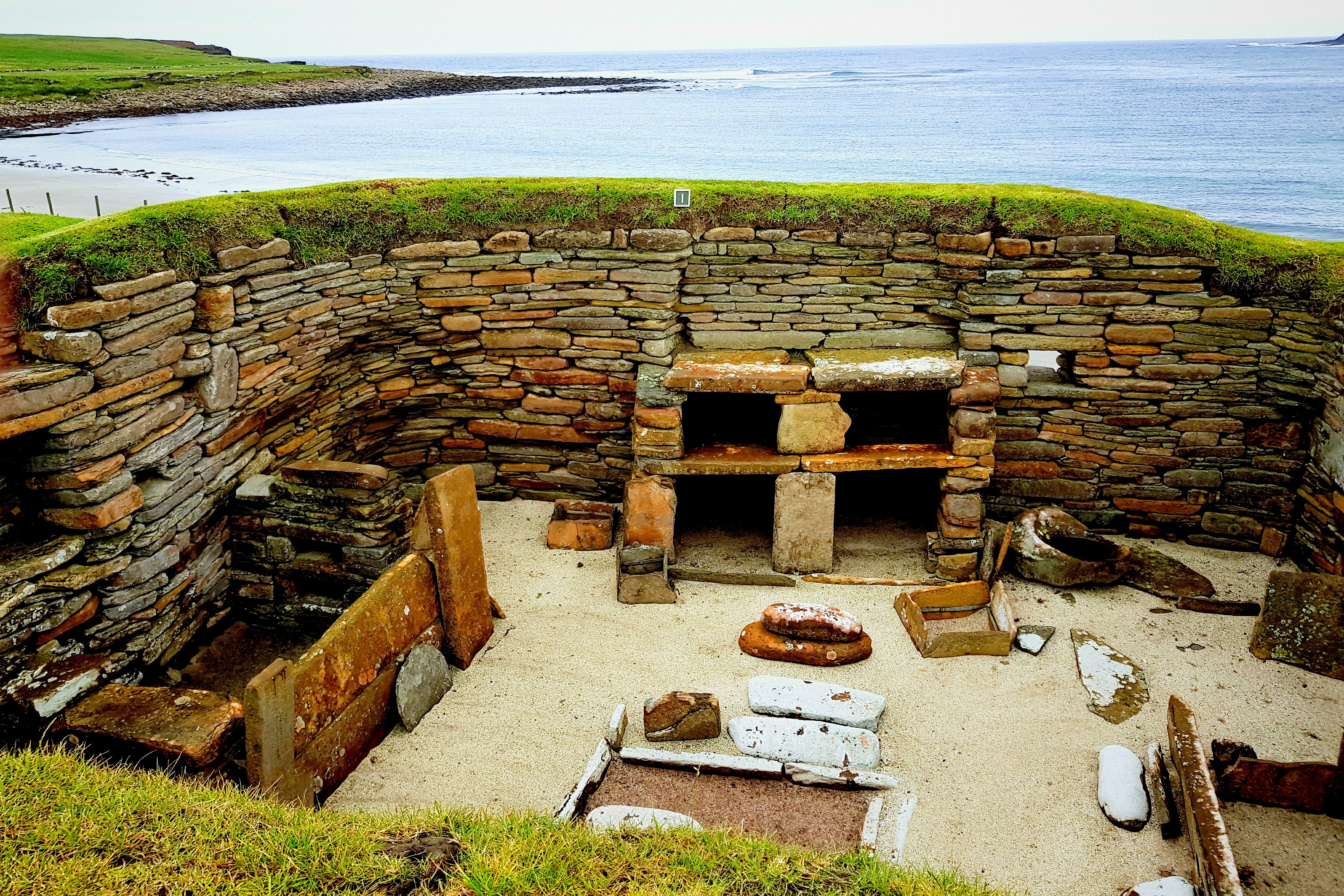
    As the week went on, we visited other five-thousand-year-old treasures. The chambered cairn of Maeshowe, engineered so its entrance was perfectly aligned with the light of the setting midwinter sun, and covered in runic graffiti, tagging the names of Viking invaders and their bawdy exploits. The standing stones at the Ring of Brodgar, built in line with the remains at the Ness and the cairn of Maeshowe, mysterious in their size and placement, hinting at Stone Age transport innovations and a shared communal spirituality. Skara Brae, the Neolithic settlement hidden beneath the sand dunes, uncovered by a nineteenth-century storm, revealing the perfectly-preserved secrets of our ancestors who lived there – a community who in all likelihood lived in family groups, gathering around a central hearth, sleeping in box beds, displaying their treasures on stone-built dressers. We saw the four-centimetre tall Westray Wife, the earliest known carving of a human form found in Scotland and one of only three such carvings found throughout the whole of the UK; a tiny stone person, with pin prick eyes, an M-shaped brow line, a possible nose and mouth below.

    And everywhere we went, there was human connection. Shared humanity. Shared values. Our Stone Age forebears were not primitive or inhuman; they were innovative and societal, craftspeople and artists, spiritual beings and master engineers, their monuments surviving for thousands of years.

    And it struck me time and again that the only reason we know all this, the only reason we can connect with them across millennia, is because of humans now – archaeologists, historians, volunteers and more – whose minds, hearts and souls yearn across the ages to connect with our forebears, to understand them. Empathy. Deep human connection.

    And it struck me that empathy, deep human connection – that is kingdom work. Jesus embodies empathy. He saw people, he read them, he understood. From the widow who gave all that she had, to the woman caught in adultery; from Zacchaeus in the tree, to his encounter with Judas at the Last Supper; in his response to Peter cutting off the soldier’s ear at his arrest, and in the way he allowed for the restoration of their relationship at the barbecue on the beach. He is all about empathy. That is at the heart of how he relates to people. When Mary and Martha sent for him as Lazarus lay dying, he delayed his journey – allowing for the greater miracle of resurrection, yes, but also for that short but well-known Bible verse. He wept. He allowed time to feel their deepest grief and loss alongside them. Empathy.

    In a world where so many of our political leaders choose to build a stance of unassailable power on bullying tactics and threats, on retribution and sanctions, it is empathy that is needed. Empathy is how we bridge the divide, geographically, culturally, spiritually, historically. Empathy is how we draw together across the division of values and beliefs. Empathy, built through shared stories and experience, founded on strong and sacrificial love for our fellow humans and our world.

    Shared humanity. Real, deep, heart-to-heart human connection. Hospitality and openness. Empathy.

    That is my choice. Join me?

  • We went in search of you…

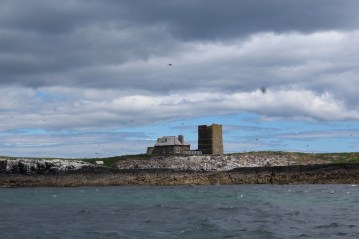
    IMG_3565We went in search of you,
    Wild and elemental,
    At home in the storm,
    With feet that walk waves.

    And we found you.
    In sand-blasted skin
    And salt-tanged lips,
    In sun-beaten cheeks
    And sea-sprayed hair,
    In briny-deep swell
    And wood-sweet smoke.
    In grit between our teeth.

    IMG_3683

    We went in search of you,
    Spirit and creator,
    Bidder of oceans,
    Wilderness wanderer.

    And we found you.
    In swallows’ nest
    And rock-pool weed,
    In basking seals
    And pebble beach,
    In wide expanse
    And sinking-sun glow.
    In puffin’s clumsy gait.

    19399003_10154429649171805_4509297819737855616_n

    We went in search of you,
    Incarnate and relational,
    Caller of all
    To hallowed community.

    And we found you.
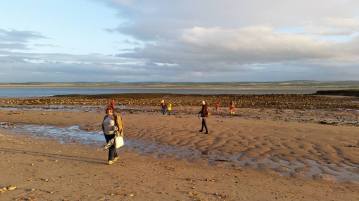
    In a bunkhouse
    And in love that held our children,
    In the arms of beach-met friends
    And in nights of gin-soaked laughter
    Carrying us past the stars to first light’s dawn,
    In broken bread and sun-warmed wine.
    In gathering around the table.

    19400054_10154429645781805_4156806894185150538_n

    We went in search of you,
    Threaded through history,
    Eternally present,
    Holder of time.

    And we found you
    In your story
    And in ours,
    In a beach breakfast barbecue
    That echoed through time,
    In Cuthbert’s eyes and hands and feet
    And centuries-stretched shadow.
    In memories shared and memories made.

    IMG_3623

    We went in search of you.
    And we found you.
    Wild and elemental.
    Spirit and creator.
    Incarnate and relational.
    Threaded through history.

    We went in search of you.
    And we found you.


  • Water into Wine

    I told the story of Jesus’ first miracle three times on Saturday. I was asked to choose two Jesus stories as part of a story walk through Bradford City Centre for the Biblefresh Festival, organised by the local Methodists. Water into Wine was my immediate first choice.

    Why? Because I love it. Almost every time I read it or hear it told, it brings something fresh with it, sometimes asking a new question, or bringing a previously unnoticed detail to life, other times letting a familiar aspect of the story shine, like meeting an old acquaintance for the first time in ages.

    There is nothing better than telling stories that you love. As a storyteller, my job is simply to stand in the story and invite others to join me there. And that’s easy with a story like this one, so rich and vivid in detail.

    There is lots about it that I love. But this weekend, perhaps for the first time, I realised the thing I love best – here, right at the beginning of his public ministry, Jesus is revealed as fully divine yet also remains fully human.

    It starts two days after Jesus has called his first followers. He, his friends, and his mum are at a wedding in Cana, in Galilee. The wedding feast lasts seven days after the ceremony but sometime into the celebrations, disaster strikes – they run out of wine!

    Somehow, Mary finds out and goes straight to tell Jesus. His response? “Why are you telling me? It’s not my time yet.”

    In typical mum-style, Mary ignores him completely and bids the nearby servants to do whatever he tells them. And so begins the miracle – at Jesus’ command, the servants fill six large stone jars with water, fill a cup from one of them and take it to the Master of the Feast. When he drinks it, it has become the best wine he has ever tasted.

    And there, at the wedding in Cana, Jesus shows his glory – and his followers believe in him. What a moment that must have been for them, ordinary men who had left everything they knew to follow him – a vindication of sorts, a sign of things to come.

    In revealing his glory, Jesus not only shows his ability to do great miracles, he also reflects the abundant generosity of God. Each water jar carries 100 litres of liquid – and Jesus tells the servants to fill them right to the top. 600 litres of the best wine ever tasted in celebration of a couple’s marriage – what better way to show his divine identity for the first time?

    Yet the miracle is also intensely human. It was while listening to my friend tell the story a few months ago that I first fully realised how much hard physical work would have been involved in the servants filling the water jars. The never-ending cycle of trips to the well, filling the buckets, carrying them back, pouring their contents into the jars, until 600 litres had gone by.

    And there is such human yet Godly beauty in how it is these hard-working lowly servants who, along with Jesus’ followers, are given the opportunity to see his glory and to understand. The Master of the Feast doesn’t know where this fine wine has come from, and calls the bridegroom out to thank him. But the servants know. Right at the start of his ministry, Jesus turns the world order on its head.

    But it is at the beginning of the story that Jesus’ humanity is most wonderfully revealed. For there is the moment when the miracle almost doesn’t happen, when Jesus says, “My time has not yet come.” And the start of his ministry, his first miracle, hangs on his mother’s response – she is the catalyst that makes things happen.

    There is something typically, comfortingly motherly about how Mary ignores everything Jesus says, over-ruling him, challenging him to do something he would have otherwise left undone. At the heart of this miracle is a very human relationship between a mother and a son.

    I’ve often wondered exactly what is behind this parent-child exchange. Is Jesus right – was this not his time to act, should the miracle never have taken place? Or was Mary more in touch with God’s timing than Jesus himself? Did Jesus’ first miracle need to be catalysed by someone else, someone who had faith in him before he had proven himself? If so, who better than Mary, his mother, who had been there for his miraculous conception and birth?

    Or is it just possible, I ask myself from my very human perspective, that Jesus, being fully divine, knew what must happen, where his public ministry would ultimately take him? And is it possible that, with this fully divine knowledge and a fully human heart, a part of him might have hesitated to set that chain of events in motion? Might he have needed a mother’s love, a mother’s encouragement, to take that first step?

    The best stories, the ones I love most, are the ones that leave you with so many questions…


  • He is alive!

    It was still dark when she left her home. She made her way through the silent streets to the garden where his tomb lay. She felt troubled but the silence comforted her. She carried spices to anoint his body.

    She reached the garden and walked down the pathways until she came to the place where the tomb lay. Her steps slowed as she drew nearer, then stopped. As she peered through the gloom, the entrance to the tomb looked darker than it should have done. Something wasn’t right.

    Where was the stone?

    She turned and ran, back the way she had come. The silence weighed down on her. She knew where to find two of his closest friends. She woke them and told them what she had seen.

    “They’ve taken him, his body has gone from the tomb. We don’t know where they’ve put him!”

    His friends hurried to the garden. She followed in their wake. She watched them enter the tomb. Alone in the semi-darkness, her eyes darted about, she was poised, ready to run.

    The two men came out of the tomb, approached her and shook their heads. One of them squeezed her hand as he passed. Then they left her.

    She stood and wept. Moments passed. She moved slowly towards the tomb, bent down and peered inside. She needed to see for herself. She took a deep breath and raised her eyes to the place where his body should have been.

    Her eyes widened. Two angels sat where he should have lain. They were dressed in white and they spoke to her.

    “Woman, why are you crying?”

    She replied.

    “They have taken my Lord. I don’t know where they have put him.”

    As she spoke the words aloud, she turned from the tomb. Her eyes flicked around the garden, seeking. Her hands grasped at her robe. She saw a man, standing where she had stood just moments before. He looked like a gardener.

    “Woman, why are you crying? Who are you looking for?”

    She replied.

    “Did you take him? Was it you, sir? Please, tell me where he is and I will get him.”

    The gardener spoke again.

    “Mary.”

    She paused. She looked at him, full and long. And she knew. She turned to him and spoke.

    “Teacher.”

    He held up a hand and her eyes followed it.

    “Don’t hold me,” he said. “I have not yet gone up to the Father. Go to my brothers and tell them this: I am going back to my Father and your Father. I am going back to my God and your God.”

    And then he smiled at her. She smiled back, nervously, with her eyes fixed on his.

    Then she turned and left the garden. She walked back through the streets. She didn’t notice the silence because her head was full of questions. She went to where she knew she would find his friends and she told them.

    “I have seen the Lord – he is alive!”

    John 20: 1-18

  • It is finished…

    The man followed them when they left his house, walking in the shadows through the streets of Jerusalem. He watched as they entered the garden. Then he crept in after them.

    He heard their lowered voices as they talked. He saw the shadows shift and settle as they moved through the garden. The silence was immense. He slept.

    He woke to the sound of more voices. The Teacher was speaking.  A crowd of people entered the garden. One of them approached the Teacher and kissed him.

    He heard the sound of a sword being drawn, a cry of pain. His eyes strained. A torch flared and he found himself looking at those hands again. They were pressed to the head of a servant. He thought he saw blood. The hands moved away.

    He watched as men seized the Teacher and began to lead him away. He heard the rustle of leaves and quick footsteps all around him. A torch flared in his face, a hand grabbed at his clothes. He twisted out of them and ran.

    *

    She sat at the window of her spare, sparse home. The oil lamp had long been extinguished. She saw the people hurry past, heard their whispers. She rose, left her house and followed them.

    She came to the courtyard of the High Priest’s house where a fire burned. Guards sat around it, warming their hands. She listened as they talked. Her eyes widened. She turned them to the windows of the building behind her.

    She found a shadowy corner and settled herself to wait. She drew her cloak around her, looked to the fire. A man stood there with the guards. She knew his face. He had been there that day, outside the temple.

    She watched a servant girl approach him, study his face, speak. He shook his head firmly. She watched him turn and walk away. She heard a cockerel crow.

    He moved to the gate, where a crowd of people huddled. She watched as the servant girl walked up to them, spoke, nodded her head in his direction. She saw the man frown, shake his head again more violently. He strode away, came to a stop by her corner.

    She waited, her eyes fixed on him. Some people who stood nearby spoke to him.

    “Aren’t you one of those that followed Jesus? You’re from Galilee, aren’t you?”

    She looked at him as he frowned and shouted,

    “I tell you, I don’t know this man you’re talking about!”

    A cockerel crowed. She watched his face fall. He looked wildly about him. She stepped out of the shadows and their eyes met. As his tears began to fall, she remembered the eyes of the Teacher.

    *

    The man untied his donkey, climbed on and set out on the journey to Jerusalem. He followed the crowds until they stopped moving. They swarmed in huge numbers, swelling the courtyard.

    Stretching up, he saw the governor standing, addressing the people. He watched as two men were led out by the guards. He knew one of them – the man who had borrowed his donkey stood with his hands bound together.

    As the governor spoke, the crowds began to cheer. He saw men moving through the crowd, speaking into the ears of the people as they went. His eyes flicked between the two prisoners who stood on the platform.

    He watched as the prisoner he didn’t know had his bonds released and walked away. He watched as the guards raised their whips to the prisoner who remained. He heard the crowd roar as the man who had borrowed his donkey was beaten before their eyes. He closed his eyes. The cheers echoed in his ears.

    *

    She followed the procession from the palace to the hill. She saw him through the bruises and the blood, watched him struggle with every step. In her hands, she carried the alabaster jar.

    She found a way through the crowd so that she could stand as close to him as was allowed when they stopped. She knew he didn’t know she was there – she was too far away. She bit her lips and kept her eyes open as they hammered in the nails. She didn’t want him to be alone.

    She stayed as the sun rose higher and felt the heat on her back. She saw the soldiers throw lots for his possessions. She was there when the sign was hung above his head: KING OF THE JEWS. She stood and faced the passers by who mocked and insulted him.

    Three hours later, she was there when the sky grew black and the darkness settled. For another three hours, she stayed in the shadows. She heard him cry out.

    “My God, my God – why have you forsaken me?”

    She saw him drink from the sponge dipped in vinegar. She was looking at his face when he cried out a moment later.

    As he died, the jar slipped from her hands.

    *

    He offered to stay in the temple. He went there that morning as he did every day. He smoothed down his robes, made sure all was in order, everything as it should be.

    He did not think of the man who was dying on the hill.

    When the sky darkened, he went to the holy of holies to pray. He stayed there for three hours, on his knees.

    As he prayed, he heard a ripping sound behind him. He stood and turned, his eyes widened and his mouth fell open. The curtain had torn in two.

    *

    It was finished.


    Mark 14:32 – 15:41

  • Those Hands

    He lifted the water jar onto his shoulders and set off through the streets. He knew people were looking at him, could feel their eyes on him as he walked. He didn’t fit, he was an anomaly. Men didn’t carry water jars – that was women’s work.

    He passed the city gate as two men entered through it. He saw their eyes widen when they saw him, saw them nudge each other. As he continued his journey, he saw them out of the corner of his eye as they followed in his wake.

    He tensed his shoulders, quickened his pace, lifted the jar a little higher. As he rounded a corner, he glimpsed them still weaving through the crowds, their eyes set on him.

    He made the last few strides to his door, opened it and went in. Putting the water jar down, he went to check on his wife and was glad to see that she was sleeping. He turned back towards the door and found himself looking at the same two men who had followed him through the streets.

    He regarded them, warily. Then they spoke.

    “The Teacher asks where the guest room is for him to eat the Passover meal with his followers?”

    The Teacher. He remembered the man outside the temple gates. He had stopped to listen. He looked at them again.

    “I have a room upstairs,” he said. “You can eat your meal there.”

    Later that evening, the Teacher arrived with a group of his friends. The man heard the clink of cups, the glug of wine being poured, as he tended to his wife. When she was settled, he seated himself at the bottom of the stairs. He wanted to hear more of what this man had to say.

    The talk of the group drifted down, increasing in volume and then breaking into laughter. He was lulled by the rhythms of their speech, the rise and fall of their conversation. Gradually, the sound stilled until he heard the Teacher’s voice. He sat up straighter.

    “Friends, I am glad we are here – I wanted very much to share this meal with you before the time comes when I must suffer. This is the last Passover meal I will eat until it receives its true meaning in the kingdom of God.”

    The man turned his head as the Teacher continued talking.

    “I tell you the truth, one of you will turn against me – even now, one of you, my friends, who sit and eat with me. I am going to die – and one of the people who sits and dips his bread into the bowl with me will betray me and hand me over to my enemies.”

    The man began to stand and creep up the stairs as a murmur of indignant voices drifted down them. When he had climbed halfway up, he stopped. He could see the Teacher’s hands and half of his face in the shadows where he reclined at the table.

    The hands reached out, picked up a piece of bread and broke it, sharing the pieces with those around the table. The Teacher continued speaking.

    “Take this; it is my body.”

    Then the hands lifted a cup of wine and passed it round. The man watched the cup as it was raised and lowered, dancing from one mouth to the next. He pressed his lips together. The room was quiet.

    “This is my blood. It makes a new agreement between God and his people and is poured out for many. I tell you the truth – I will not drink of the vine again until I drink in the new kingdom of God.”

    Silence fell. The man’s gaze was fixed on the hands of the Teacher. A voice started singing, then another joined it, and another, until the room was filled with music.

    The man crept back down the stairs, went to his wife’s side and tucked the blanket tighter around her. He sat down beside her bed, raised his eyes to the ceiling and closed them. He could still see those hands.

    Mark 14: 12-26

  • A Generous Gift

    The sound of voices surrounded her as she walked, noise upon noise, donkeys braying, haggling, shouts, laughter. She could smell the scents of the busy market place, olive oil, baking bread, freshly cut wood, pungent ointments. She walked up to a man, exchanged a few words, handed over a large bag of coins, picked up her purchase and left.

    As she walked home, she carried the jar carefully in her arms. It was made of perfect alabaster, smooth and faultless. The touch of it soothed her.

    *

    She had seen the troubled look in his eyes as he spoke outside the temple.

    She had been part of the crowd, cheering as he rode into Jerusalem. And she had sought him out after that, intrigued by his words and by his presence.

    He had been telling a story that day, she remembered it perfectly. The vineyard owner who had leased his land to farmers, how they had killed his servants one by one, until finally he had only his son left to send. But the farmers had killed even him.

    She had watched him as he spoke, had watched the subtle changes in his expression. She had seen the faces of the Jewish leaders as they looked at him, heard their harsh voices as they questioned him. He seemed like a man who carried much.

    *

    When she got home, she placed the jar carefully by the door, took off her headscarf and went to rest.

    Later, as the sky faded and dusk began to fall, she wrapped herself in her cloak and scarf, picked up the jar and left the house. She walked through the darkening streets until she reached the place she sought. Pushing the door open, she entered the house.

    She could hear the murmur of voices in one of the rooms. Carrying the jar, she opened the door and walked inside. He was there.

    Poised, she moved across to where he sat, opened the jar and poured its contents over him. A sweet scent filled the air. She bowed her head.

    She could hear voices, hard, questioning, in the background, but she heard not what they said. She did not raise her head until the voice she heard was his.

    “Leave her alone. Why do you trouble her? She has done a wonderful, generous thing for me. You will always have the poor with you and you can help them any time you want. But you will not always have me.”

    She looked at him and again she saw the unease in his eyes. But as he looked at her, she saw too that he understood her actions.

    “This woman has done the only thing she could do for me. She poured perfume on my body to prepare me for burial. I tell you the truth, wherever people hear about me in the world, her story will also be told. People will hear of what she did for me – and they will remember her.”

    As she left, she felt lifted by his words but also apprehensive. He spoke with kindness yet so many questions remained unanswered.

    As she walked, the expression in her eyes mirrored the one that had called to her as he spoke outside the temple.


    Mark 14: 3-9

  • Enough is Enough

    The priest picked up the scroll and put it away with the others, neatly and carefully lined up on the shelf. He turned and straightened the oil lamp on the table. Then he smoothed down his robe and left the temple.

    He walked with long strides past the benches of the dove sellers and the tables where the money changers worked. He swept his eyes over them, pleased that they stood in orderly rows, each in its proper place.

    Swiftly, he moved through the temple gates and into the courtyard. As he passed them, people straightened their backs and stood taller, or shrank back and scurried away. But of this he seemed oblivious, eyes forward, feet in motion, his gait steady, certain.

    The rhythm of his feet matched the words in his head.

    “… It is written in the Scriptures, ‘My Temple will be called a house for prayer for people from all nations.’ But you are changing God’s house into a hideout for robbers …”

    He blinked, once, imperceptibly, and kept walking.

    “… I will not tell you what authority I have …”

    His fingers twitched, imperceptibly, and he kept walking.

    “… Beware of the teachers of the law …”

    His pace quickened.

    “… They like to walk around wearing fancy clothes … They like people to greet them with respect …”

    A single drop of sweat beaded on his forehead.

    “… They love to have the most important seats …”

    His fingers twitched, his fist clenched.

    “… They cheat widows and steal their houses … They try to make themselves look good by saying long prayers …”

    His lips pressed together.

    “… They will receive a greater punishment … The temple will be destroyed … Not one stone will be left on another …”

    As he opened the door to his house, images flashed through his mind. Tables overturned, benches flung aside, scrolls tumbled to the floor, a broken oil lamp, stones toppled, cries, chaos, confusion.

    The door fell shut behind him. He stood. His chest heaved. Enough was enough. This man must be stopped. 


    Mark 11: 15-19, 27-33, 12: 1-12, 18-40, 13: 1-2, 14:1-2

  • All that she had…

    The woman drew her cloak around her and looked around the small room. Spare, sparse, but clean and well looked after. Home.

    She picked up a bag and placed two small copper coins in it, leaving the shelf bare. Then she opened the door and left.

    She walked down the street with her head down, keeping close to the walls, withdrawing from the people as they passed. She crossed the busy market place without stopping until she came to the temple gates. Then she sat down on a stony wall and watched and waited.

    The courtyard was busy, thronging with people. Close to where she sat, a man was addressing the crowds. He spoke with authority and his voice was compelling. Barely moving her head, the woman raised her eyes to his face, just for a moment.

    Turning, she saw a group of men enter on the other side of the courtyard. They seemed intent on something, moving as one. She watched as they noticed the man who was speaking and walked resolutely towards him. As they drew closer, they pushed through the listening crowd, stopping right below where he stood. Then one of them spoke.

    “Teacher, we know that you speak the truth about God and are not afraid of what others might think. Tell us – is it right to pay our taxes to Caesar or not?”

    The teacher turned his face full upon the speaker and met his gaze.

    “Why do you try to trick me? Give me a coin.”

    The woman touched her money through the fabric of her bag as a coin was passed up from the crowd. The teacher held it up and spoke again.

    “Whose name and image are on this coin?”

    “Caesar’s,” came a voice from the throng.

    “Then give to Caesar what is Caesar’s and give to God that which is God’s,” said the teacher.

    Silence followed. The woman watched as the men who had approached so purposefully shuffled their feet and drifted away in ones and twos. The teacher continued speaking.

    She turned her eyes back to the temple. A steady stream of people entered and left, many well dressed and followed by attendants carrying large heavy bags. The woman felt her two small coins again and lowered her eyes. When she next looked up, the teacher and his crowd had gone.

    Rising from the wall, she picked up her bag and walked into the temple. Head down, she moved quickly towards the money box. Standing as close as she dared, she slipped her hand into her bag, withdrew her two small copper coins and dropped them into the box in one smooth movement.

    As she turned, she felt someone watching her. Pausing, she lifted her gaze and found herself looking directly into the eyes of the teacher who had been speaking outside the temple. He looked straight at her and the world stopped for a moment.

    Then she turned and left the temple, and walked back to her spare, sparse home, with her head held high and with dignity in her steps.


    Mark 12: 13-17, 41-44

  • The Master Needs It

    There was once a man who bought a colt. The colt was untrained and had never been ridden and the journey home was a hard one. As the man struggled to tie the colt to the wall of his house, his neighbour saw him and said,

    “Is that the best you could get? You’ll waste all your time trying to train him. Still, you’ve got to go with what you can afford, I suppose…”

    A stranger was passing and had stopped to watch. He heard what the neighbour had said and spoke.

    “Friend, you judge by the values of the world. But God is our master and all that he has made is valued by him. Even this day, the master may have need of this colt, untrained and unbroken as he is. And if he does, then the beast’s true worth shall be seen.”

    Then the stranger turned and left them.

    Later that day, the owner of the colt was outside his house with a group of men, discussing the best way to train the donkey. Two men turned into the street and approached the house. They walked up to the wall and began to untie the colt. Frowning, the owner approached them and cried,

    “Hey! What are you doing? That’s my colt!”

    The men turned to him and said,

    “The master needs it.”

    The words of the stranger hung in the air. The owner looked at the men and nodded. He watched as they untied his colt and struggled to lead it away, the donkey pulling against the rope at every step. Feeling the eyes of his friends on his back, he spoke, quietly but firmly,

    “The master needs it.”

    Later that day, the man saw streams of people rushing past his house. He stepped outside and stopped one of the crowd, who said,

    “Haven’t you heard? The master is coming!”

    The man left his house and followed the people out of the town, where they swarmed in huge numbers, lining the streets. Some of them were waving palm branches and cheering. Standing on tiptoe and craning his neck, the man looked up the road and saw more crowds approaching. At the head of the group, a man was riding a donkey that looked just like his colt. But this animal was not straining or pulling against its rope. It walked humbly but with great dignity, bearing its master willingly.

    “The master needs it,” the man whispered.

    As the crowd swelled and rolled back, the man found himself at the front of the roadside. Unthinkingly, he reached up, took off his cloak and spread it on the ground. He watched as the hooves he had struggled to guide that morning left their prints on his coat. Looking up, his eyes met those of the man riding the colt. Then the crowd passed by and he was gone.

    Later that evening, the man stood on his doorstep in the gathering dusk. Two men turned into the street and approached the house, guiding the colt. They handed the rope to the man and said, “Thank you.”

    The man nodded, then they turned and walked back up the street. As he held the colt, it did not pull or struggle. He led it to the wall and tethered it there easily.

    Then he turned and went into the house, closing the door behind him.


    Palm Sunday · Mark 11: 1-11