Tag: Storytelling

  • A Decade of Refugee Voices

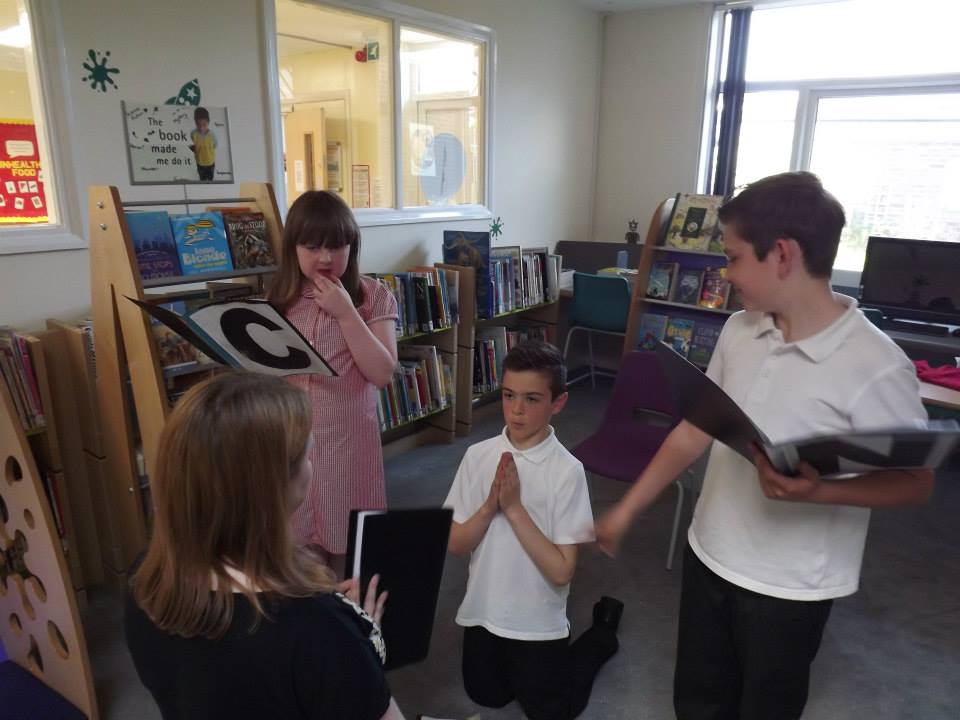
    Ten years ago, I flew by the seat of my pants into a secondary school I’d never worked in before, my friend Amy, an actor, at my side. Our task – to prepare and perform a play in a week with a group of nine 11 and 12-year-olds. The subject – retelling three true stories of refugees who had lived in or passed through Bradford, in their own words. The script – freshly written, untried, untested. The aim – to educate the children on what it means to be a refugee so they could act as peer educators to their classmates.

    We had four mornings – approximately 12 hours – to educate them on a topic they knew next to nothing about, run myth-busting sessions, sensitively share stories, workshop and block 11 pages of script into a performance that would hold the attention of other year sevens.  

    We had no idea if the project would work.
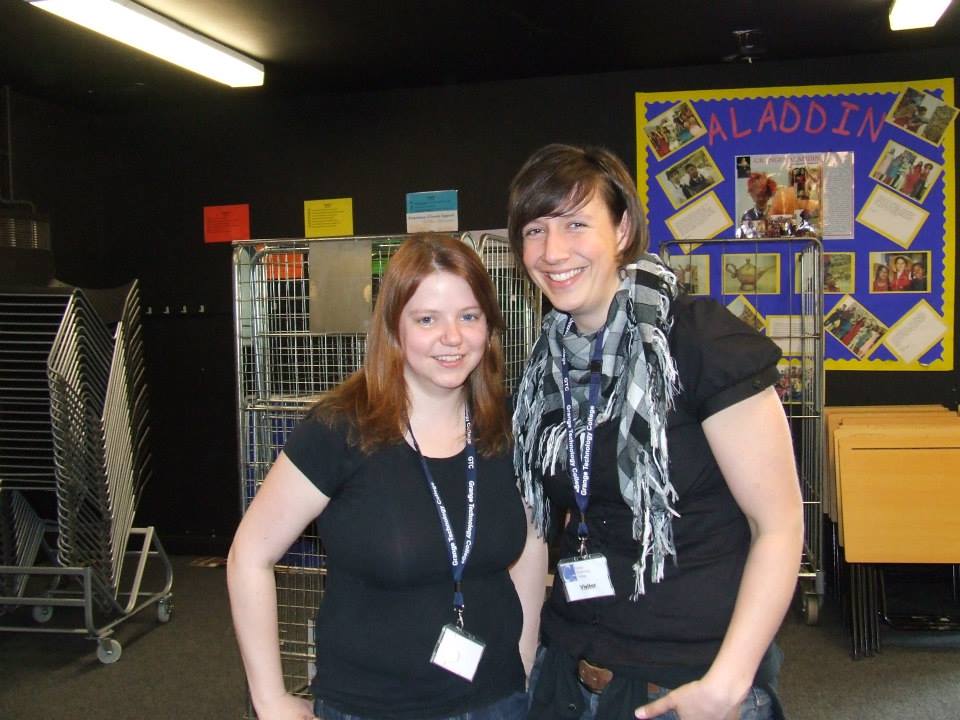
    Working with Amy on the Refugee Voices pilot project, April 2011

    On the first day, when we asked what they already knew about refugees, one boy shared the things his father told him from reading the tabloid newspapers. “They come over here to take our jobs, they get loads of money and big houses, they pretend to be in danger but they’re not really, they could just live somewhere else, they want to come here because we’re too soft.”

    We gave him the main role in the play. He spoke the words that had been gifted to us by Michael, a Zimbabwean lecturer who came to the UK to take care of his sick daughter and found himself unable to return home. It took the UK asylum system 6 years to verify his claim and grant refugee status. He lost his career, his income, his family, his home.

    The boy who was playing him came in one morning and told us he’d been in the park with his dad the night before. They’d seen a family they assumed to be refugees. His dad had started talking about them; and the boy turned to him and shared all that he had learned, the facts and the figures, the truth about the UK asylum system, correcting the myths propagated by the press.
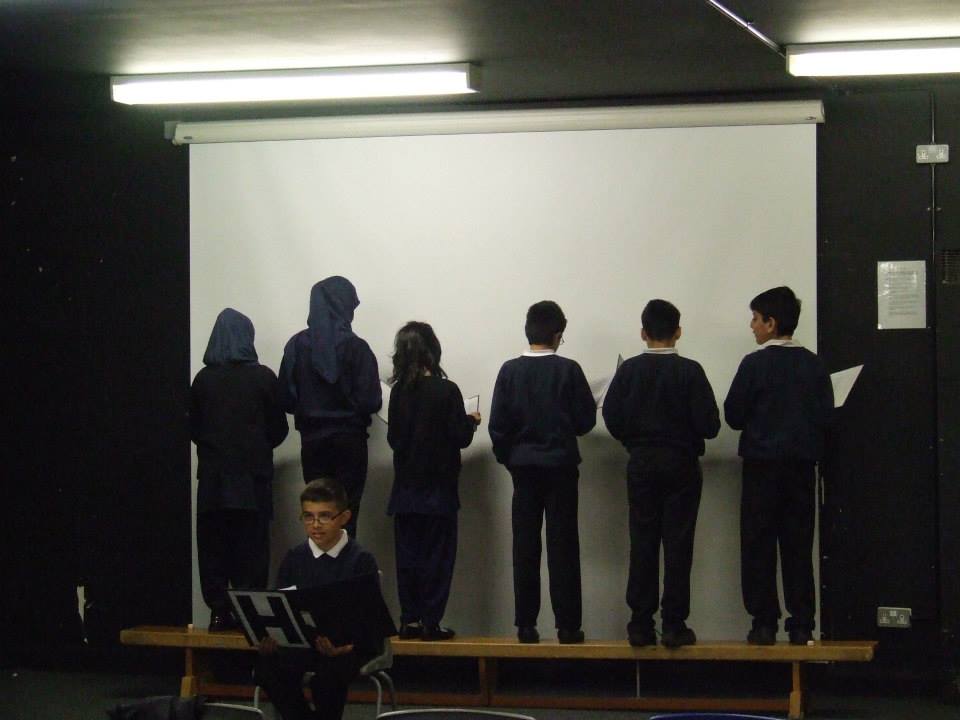
    And at that moment, we knew we were on to a good thing. That the project had worked. And that its purpose – building empathy and respect for those who have to flee their home countries in fear of their lives – was vital.

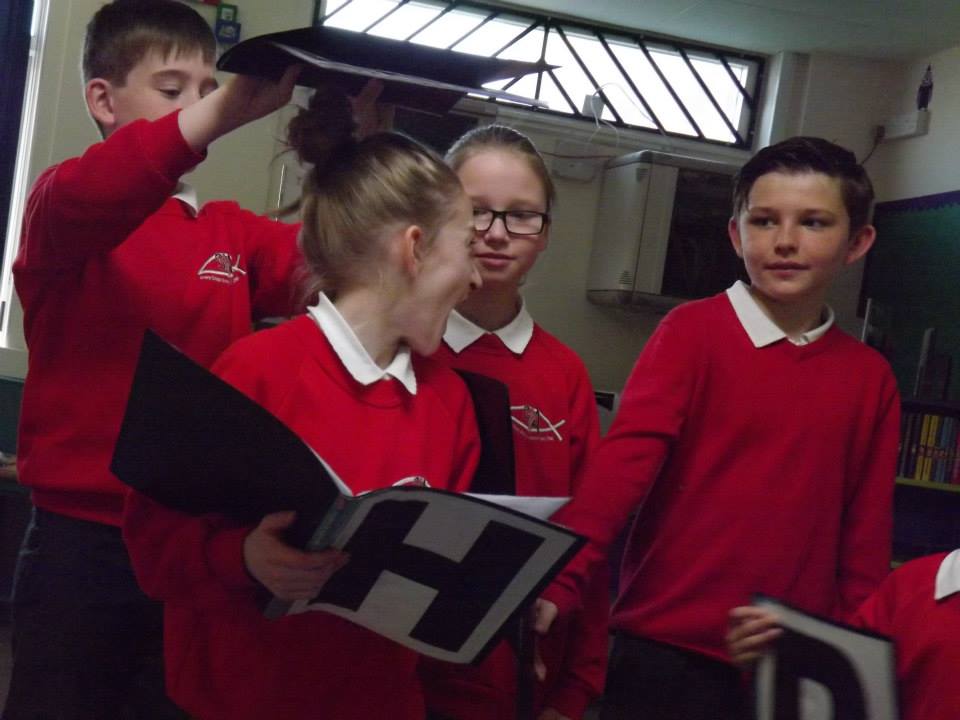
    Since that first week, a decade ago, we have run the project more than 40 times. More than 400 amateur actors have performed our stories to over 2,300 people.

    I have taken part in many thoughtful and sensitive conversations with children and young people, as they seek to meaningfully grapple with issues of power and war and displacement.

    I have felt the dawning of deepening understanding in the silent, freeze-frame acting of torture and funeral scenes.

    I have witnessed the discovery of light in the shadows, in the joy of a wedding scene, the warmth of welcome, the strength and kindness and determination of the human spirit.

    I have seen a group of children support their classmate, a recently arrived refugee still getting to grips with English, to take part in the play alongside them.

    I have seen young people determined not to take an interest at the start of the week thrive on the buzz of a powerful performance, declaring it the “best week of our lives!”

    And I have seen their fire burning against injustice, their commitment and determination to tell the stories they have been entrusted with, truthfully and with respect.
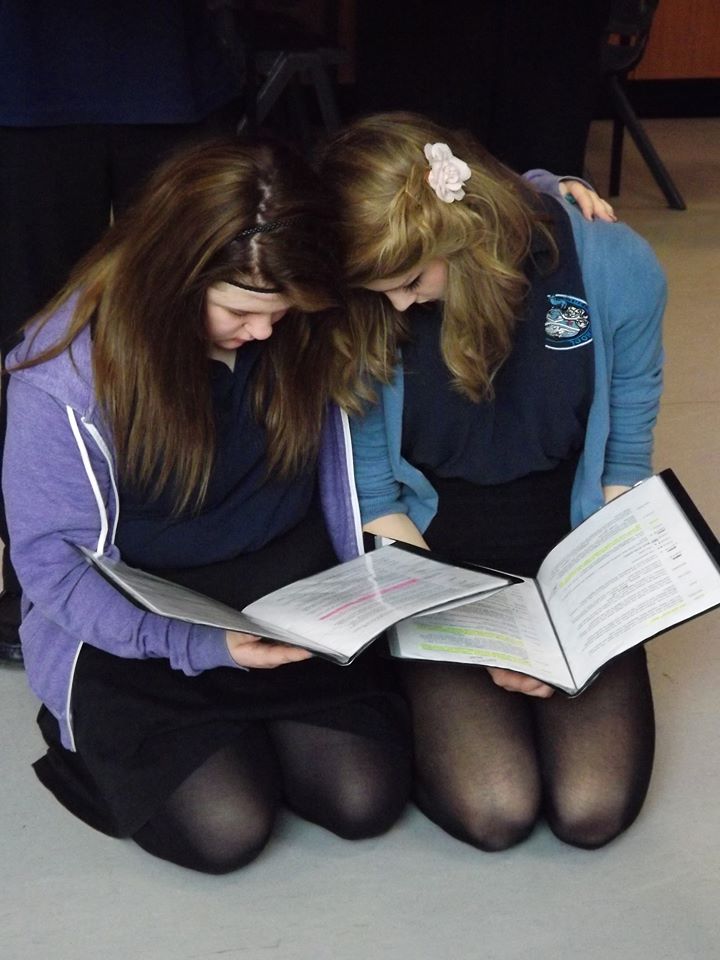
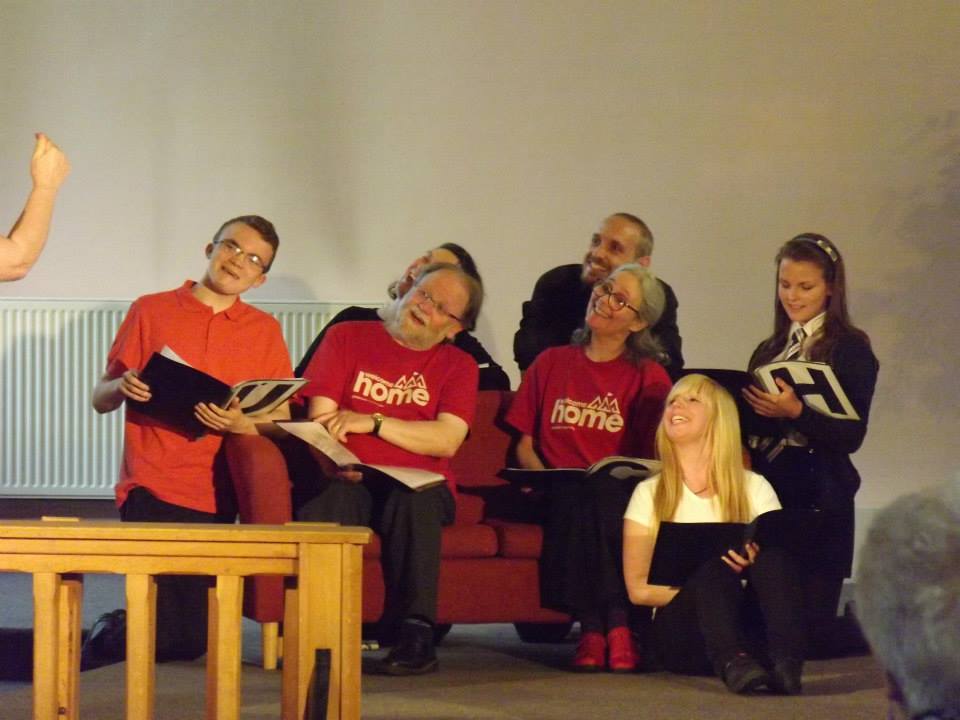
    Since that first pilot project ten years ago, we worked with Bradford’s City of Sanctuary group to set up the Schools of Sanctuary project in the city, establishing an annual art exhibition for Refugee Week, where artwork from refugees, schools, and professional artists is displayed alongside one another. The stories included in the script have been told in song, through artwork, and in animation.

    And when I think back to those first tentative, uncertain steps, I am so glad that we took them. I love this project – it is needed now more than ever. The power of stories, of shared experience, is such a vital tool for changing hearts and minds and building a kinder, more empathic world.

    More than anything, I am thankful to those who entrusted us with their stories. To Michael, Jhora, Richard, Judy and William. What a privilege it always is to tell them – and to see them changing lives.

    *The man whose story goes under the name of Michael in our script sadly passed away earlier this year. He was the first to entrust us with his story, seeing the potential in the project and offering up his own words and experiences. He came to watch one of our early performances, hear the song inspired by his story, and speak to students afterwards; he was visibly moved by the experience. He was a larger-than-life character and a key contributor in bringing Refugee Voices to life. We won’t forget him.  


    Refugee Voices is a ground-breaking drama project created by Storyteller Julie Wilkinson and run in partnership with the Zephaniah Trust – find out more about it here.
    You can watch the online performance of Refugee Voices, filmed for Refugee Week 2020, here.

  • Zephaniah Tale

    I’ve been working as a storyteller for an extraordinary organisation, the Zephaniah Trust, for almost 18 years. It was through them that I became a storyteller and they have provided the space for me to nurture and develop my gift ever since.

    Around seven years ago, I wrote a story for Zephaniah’s 20th birthday celebrations. It was my attempt to capture what Zephaniah is, its character and its ethos, the work it carries out and how it touches the hearts of so many.

    The sources of inspiration were multiple:
    – My friend and colleague, John, the man with “a guitar on his back and music in his heart”, who founded the Trust and has invested so much in drawing out the gifts of others.
    – Those who, over the years, have been part of the Trust and its journey – the pianists and whistle players, artists and circus performers, actors and office princesses, singers, percussionists and word-weavers – who joined in with what the Trust is and created an open, inclusive community to shine its light on others.
    – A song – Somewhere Along the Road – written by Rick Kemp and originally performed by Steeleye Span, first discovered by me through the Emily Smith cover version, a line from which appears near the end of the story.

    And the beating heart of my tale, the text of Zephaniah 3:17 – a verse from the Bible and the inspiration for the Trust. “The Lord your God is with you. He is mighty to save. He will take great delight in you. He will quiet you with his love. He will rejoice over you with singing.”

    What does it mean, what does it look like, to know all of that in our hearts and share it with those who have eyes to see and ears to hear? To enable people to know the presence and strength of God through present and strong community; to feel the great delight of God in how we take delight in one another; to feel the quiet comfort of his light in dark corners; to hear his voice rejoicing over us with singing.

    Well, it feels like this…

    Watch me tell the story or read it for yourself below. Long may Zephaniah continue to shine God’s light in dark corners.  

    Zephaniah Three: Seventeen

    There was once a man who walked the land, travelling from place to place, carrying a guitar on his back and music in his heart. As he went, he stopped regularly to set the music free to the people he met.

    It was very rare that he found the music wasn’t welcome – on those occasions, he would shake the dust off his feet and move on. But most of the people who heard his song listened. Some joined in. And some, as they listened, really heard it.

    As he travelled, he met others on the road who went with him for a time. Pianists and whistle players. Artists and circus performers. Actors and office princesses. Some joined his song, singing with beautiful harmonies and soaring voices; some beat out patterns and rhythms, calling to others to join in; and some had a way with words, weaving them this way and that way into stories and poems, that opened people’s eyes and hearts to new ways of seeing.

    Some of these fellow travellers walked with him for just a few miles. Others stayed for days, weeks, months, and years. But however long they stayed, once they had travelled together, they were joined by a bond that never broke, however stretched it became over distance and time.

    This ragtaggle group of travelling players often found themselves tracing their steps back to the same places, again and again. In one such place, a boy and a girl grew up hearing their songs and listening to their stories.

    On the first few visits, when they were very small, something called to them in the music and the actions and the giggles, and they responded instinctively. As they grew older, they found their mouths joining in with more of the words and their ears stretching to follow more of the stories. And as they grew older still, they began to notice that there was more to this group than just stories and music. There was something in the way they spoke to each other. There was something in the way they spoke to others. And there was something, something more, in the way that they walked.

    The boy and the girl spoke of this to one another. What was it about this group that set them apart? What was it that made them different, that drew people to them wherever they went? What was it that was there, in the way that they moved, as though they were dancing to some music that only they could hear?

    And the boy and the girl decided they would ask them.

    So the next time the group arrived on a visit, the children watched as they settled and began unpacking their guitars and unwinding their stories. And then they approached and in tentative voices they asked,

    “Excuse me, what is it that makes you move that way? What is it that you can hear that we’re missing?”

    And the man and his ragtaggle bunch smiled down at them and crouched beside them, and said,

    “Do you remember when you first saw us, when you were small, when the music and the laughter called to you and you joined in because you just couldn’t help it? Did you ever hear anything, something that wasn’t us?”

    The children looked at one another and shook their heads.

    “Then listen. Today, you should listen.”

    And so the children took their places as the group began to play and sing and talk and laugh, and they listened. They listened hard, stretching their ears for all they were worth. But they didn’t hear anything except the sounds of the music. So, they concentrated their minds on the music and the words like never before. But they didn’t hear anything except the sounds of the music. So they strained and stretched their bodies and their muscles, listening with themselves till they started to ache. But they didn’t hear anything except the sounds of the music.

    And then they remembered the words that had been spoken – “Remember – when you joined in because you just couldn’t help it?”

    And they looked at each other and they listened again, but this time they listened with their hearts, opening themselves to the words and the music and the laughter, joining in with it all because they just couldn’t help it. And this time, as they listened, they heard a voice, soaring away above all of the rest – and they remembered it…

    “Raise your eyes and see my world. Raise your voice and sing out!”

    And so they sang and they sang, and the more they sang, the stronger the voice became. And their feet began to move, because they just couldn’t stop them, and they realised that this was it, this was what the man and his friends could hear. And something inside them felt whole and complete.

    Afterward, they went to the man and his friends and asked, “Whose was that voice, that singing?”

    And the man looked at them, smiled, and said, “The Lord your God is with you. He is mighty to save. He will take great delight in you. He will quiet you with his love. He will rejoice over you with singing.”

    And the children both understood and didn’t understand, all at the same time, and their hearts felt full and their feet felt light and they knew that they’d found a music that was greater than that of the man and his friends. And they knew that now they’d found it, they would never be able to forget.

    So raise your eyes and see his world, raise your ears and hear his voice, raise your voice and sing out! And never, never forget…

     © 2014 Julie Wilkinson

  • The Cracked Bottom

    Every storyteller has ‘signature stories’ – tales they are known for telling, the stories that live in their hearts and find their way onto every set list. This is one of mine. Inspired by a folk tale likely to be either Chinese or Indian in origin, my version was first written and performed at a children’s summer camp in 2008. It’s a timeless story – and one that I never tire of telling…

  • World Book Day 2019

    Shelf

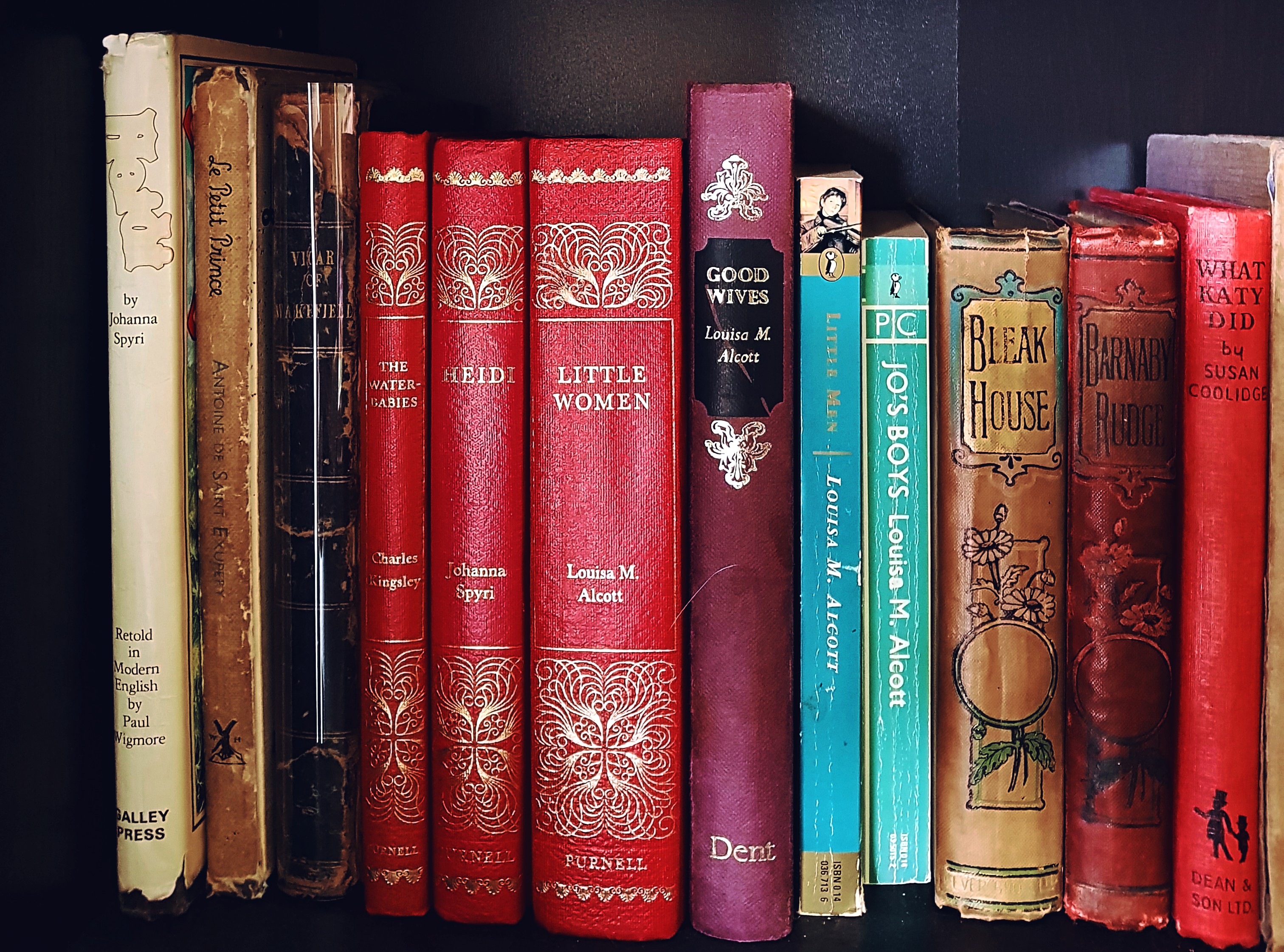
    My shelves are full of friends,
    Sitting back to back along the rows.
    Their spines recall the footprints
    They have printed on my soul.

    From the alcove,
    Heidi smiles,
    Sun-faded and familiar.
    Her pages are as old as I am.
    Every night for years,
    She told me how little girls
    Could be brave and change the world
    And be homesick all at once.

    Nearby, red leather and gilt letters
    Hold the March sisters.
    Meg, forsaking romance to build something far more real;
    Amy’s gaze slowly turning from itself.
    Beth, whose light touch left a deep and lasting legacy;
    And Jo, who struggled with the world,
    And all of its injustice,
    Writing it out with ink-stained fingers.

    With my friends,
    I joined the circus,
    Sailed boats to secret islands,
    Fled the destruction of Farthing Wood,
    And the bombs of the London blitz.
    I heard the crunch of Narnia snow
    And tasted second breakfast.

    I am Hermione,
    Consuming the library one shelf at a time;
    I am Elizabeth Bennett,
    Fighting convention with razor-sharp wit;
    I am Matilda,
    Standing up against power misused and abused.
    I am Offred. And Tess Durbeyfield. And Hero.
    The voiceless given voice.

    Michelle Obama
    Took me to stand on the White House Lawn;
    Yusra Mardini
    Pulled me into the sea from a refugee boat.
    Emmeline Pankhurst
    Allowed me to march beside her;
    And Maya Angelou
    Taught me why the caged bird sings.

    Burglar Bill showed me the power of redemption,
    Dr Seuss how to fall in love with words;
    Lemony Snicket challenged the need for happy endings,
    And Pippi Longstocking laughed at the absurd.

    Every page turned,
    Every woven word,
    Every journey taken,
    Every story unfurled,
    Stitches into who we are,
    And who we want to be.

    Like Pi and Richard Parker, set adrift in their boat,
    We choose the stories we prefer.

    My shelves are full of friends,
    Sitting back to back along the rows.
    Old friends; new friends
    To leave footprints in my soul.

    Copyright © 2019 Julie Wilkinson


  • We went in search of you…

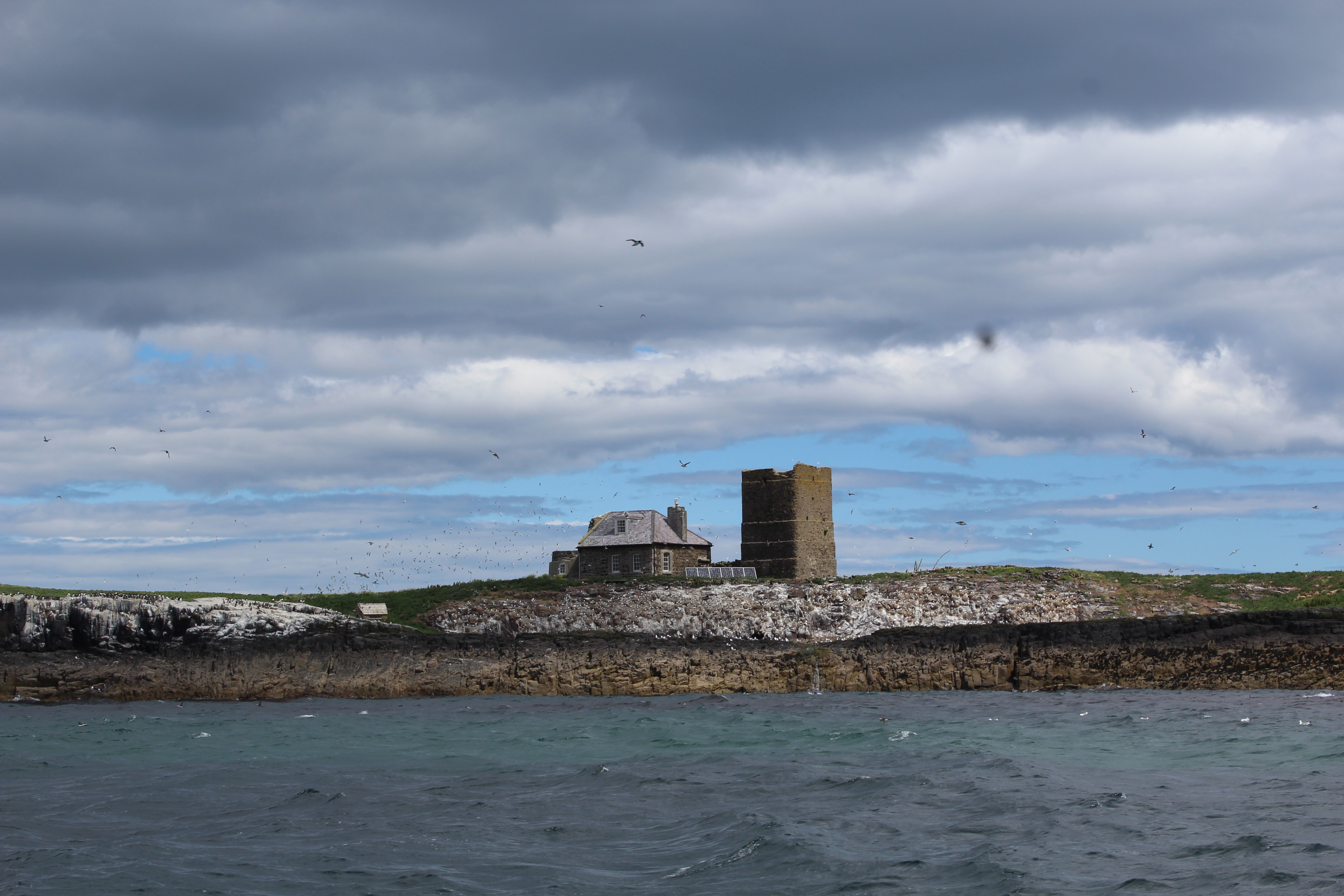
    IMG_3565We went in search of you,
    Wild and elemental,
    At home in the storm,
    With feet that walk waves.

    And we found you.
    In sand-blasted skin
    And salt-tanged lips,
    In sun-beaten cheeks
    And sea-sprayed hair,
    In briny-deep swell
    And wood-sweet smoke.
    In grit between our teeth.

    IMG_3683

    We went in search of you,
    Spirit and creator,
    Bidder of oceans,
    Wilderness wanderer.

    And we found you.
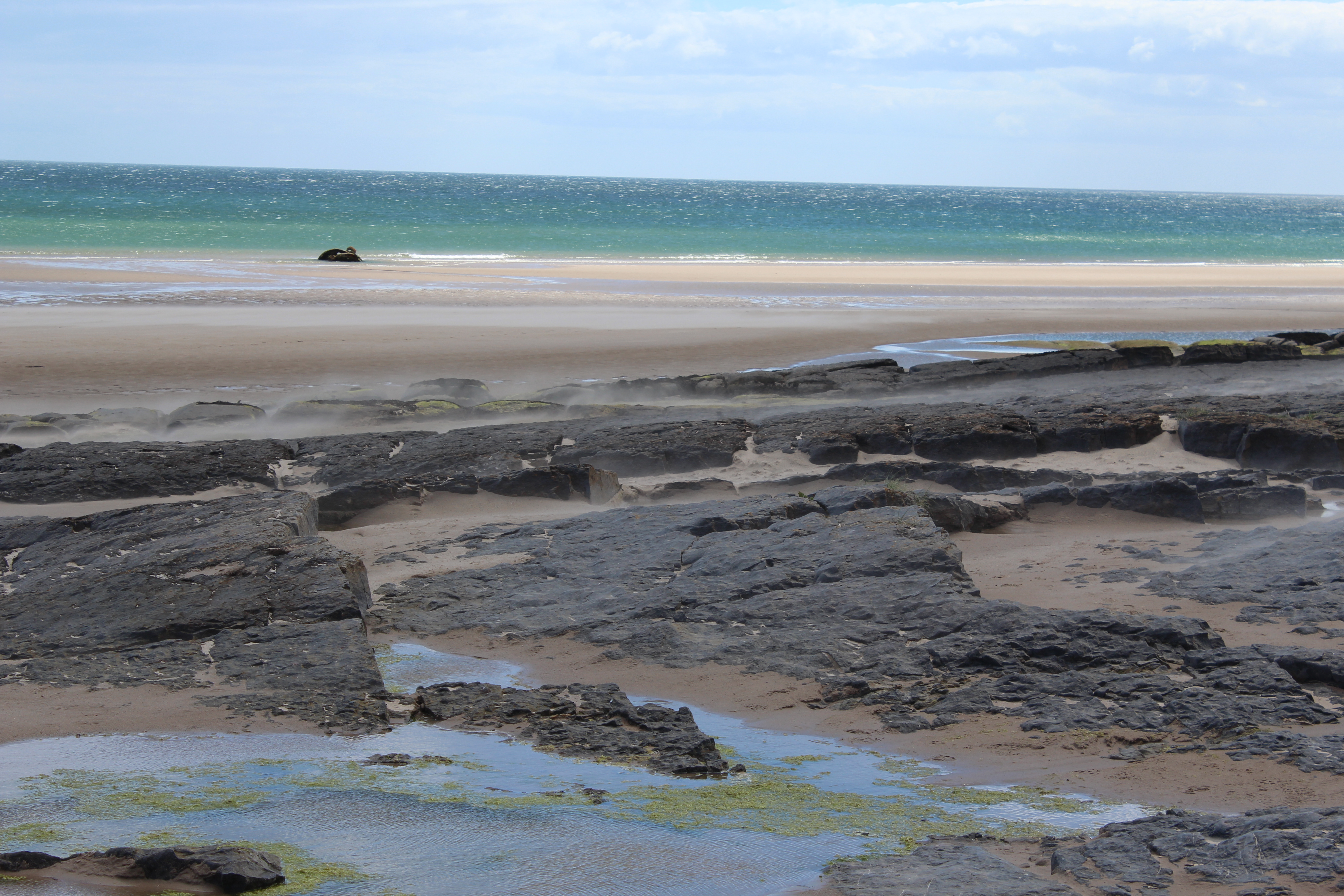
    In swallows’ nest
    And rock-pool weed,
    In basking seals
    And pebble beach,
    In wide expanse
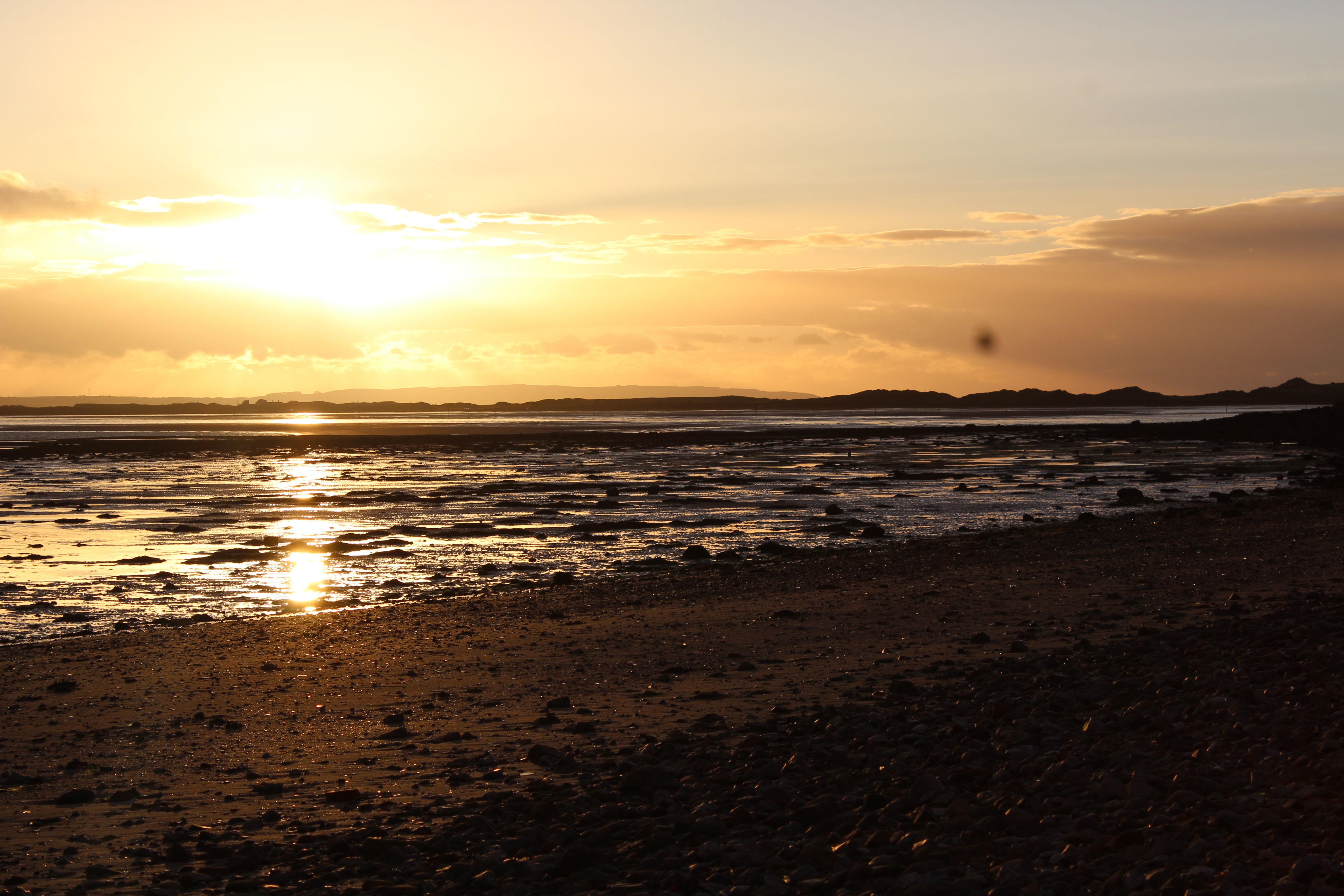
    And sinking-sun glow.
    In puffin’s clumsy gait.

    19399003_10154429649171805_4509297819737855616_n

    We went in search of you,
    Incarnate and relational,
    Caller of all
    To hallowed community.

    And we found you.
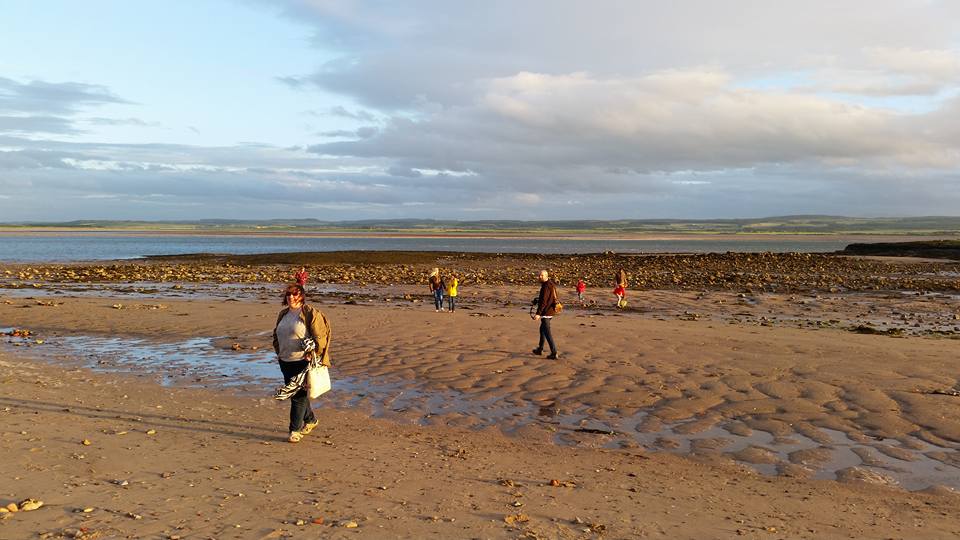
    In a bunkhouse
    And in love that held our children,
    In the arms of beach-met friends
    And in nights of gin-soaked laughter
    Carrying us past the stars to first light’s dawn,
    In broken bread and sun-warmed wine.
    In gathering around the table.

    19400054_10154429645781805_4156806894185150538_n

    We went in search of you,
    Threaded through history,
    Eternally present,
    Holder of time.

    And we found you
    In your story
    And in ours,
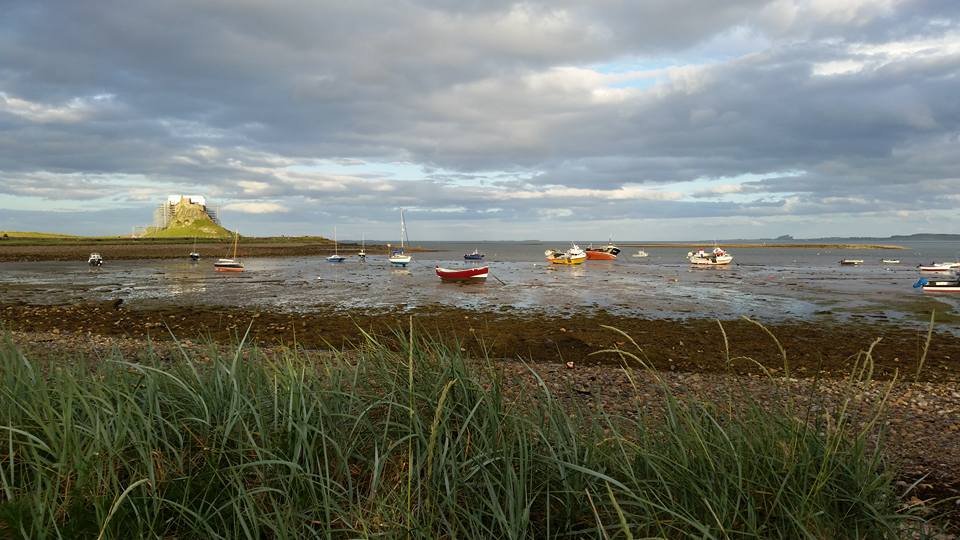
    In a beach breakfast barbecue
    That echoed through time,
    In Cuthbert’s eyes and hands and feet
    And centuries-stretched shadow.
    In memories shared and memories made.

    IMG_3623

    We went in search of you.
    And we found you.
    Wild and elemental.
    Spirit and creator.
    Incarnate and relational.
    Threaded through history.

    We went in search of you.
    And we found you.


  • The Fear

    The fear comes as waves. One small surge after another nudging her slowly out of her depth until she is treading water and she knows. The fear is no longer just around her and above her, it is beneath her, rolling and reeling. The tentative solid ground she held is still there, but too far away, she cannot reach it. She tries to keep calm. She can do this. She has done it before. She can tread water, she is strong, she can last until the solid ground comes back within reach. But each second, each minute, each hour of treading water is draining and exhausting. And the fear surrounds her, rushing and billowing. At first, it rocks her and the feeling is familiar and the familiarity deceives her because she has been here before and she knows what to do, she has well-worn strategies for fighting the fear. And so she surrenders to the old familiar rocking and it pulls her off course until she cannot remember which way she is facing and she cannot remember the solid ground that is way, way beneath her. The swell pitches and reels, pulling her this way and that way, until her head is spinning and her body is thrown. And then the fear rises underneath her, propelling her toward the sky, further away from solid ground, and the rocking becomes violent and unpredictable, plunging and pitching her around, and she is drowning in the fear and it is stronger than she is. And as it takes her, masters her, her control slips and she falls back on base instinct, throwing every ounce of her small strong body into survival, a wild, unchecked fight, trusting no one and nothing, not even herself. She is riding the waves because she has no choice and she knows they could crash, overwhelm her at any moment.

    There is someone riding the waves with her. She is aware of them. They hold an orange life ring. Sometimes the deluge brings her closer to them and they push the circular object towards her. She won’t take it. Like the initial familiar rocking of the waves, it is a trick, offering false reassurance so she will stop fighting and be lost. Everything is at stake. And she fights the ring and the person too, throwing everything she has at them and more.

    The fear is deep and lurching now, crashing in enormous waves all around her. Panic swirls and eddies through the current. Terror winds itself around her limbs, hauling, dragging her down. She reaches out, hands graze rubber. The life ring. Iron fingers grip because she has no choice. She gives herself up to the waves and, with each passing moment, her trust in the orange object increases. She opens her eyes. Her co-swimmer is there, holding fast to the other side. She thinks they are pulling against the prevailing tide. She doesn’t know where they get their strength from. The violent dizzying waters begin to recede, slowly becoming a more gentle bob. They float there, together.

    She is spent, exhausted, every particle of fight drawn from her and washed away. She feels the life ring dip and move. Arms reach out and hold her tenderly. She sinks into them, lets them take her weight. They carry her, gently. She becomes aware that the feet of this person are planted on solid ground once more. They sit in the shallows. The waves lap around them. They are drenched in fear but it is no longer ascending. They both know that it will come again, that they will repeat this feat of endurance as many times as it takes.

    But for now, they sit. She is held. She is safe. She closes her eyes. The wind strokes her face. And for a time, she sleeps. 


    The Fear
     
  • I will remember them…

    My Grandad used to try and catch us between his feet when we walked past him. Filled with just the right amount of fear and trepidation, I’d summon up all my childish courage and try to reach the other side of the room without him catching me. I never managed it.

    I will remember them...

    He had brown weathered skin from years working outside as a builder, a tattoo that said ‘Mary’ even though my Nan’s name was Annie, and he always wore slippers. When my mum was young, he used to do the washing up when it was her turn so that she didn’t have to. Legend has it he once dangled a dead mouse through the window to frighten one of my Aunties while she was having a wash. And the love he had for my Nan drew from her the most tenderness I ever saw her express.

    He also hated Remembrance Day.

    Born in 1918, he was 21 when World War Two broke out. I know far less than I’d like to about his time during the war. I do know that he met my Nan while on active service. His step-sister, Evelyn, was her best friend and she persuaded my Nan to write to him while he was in the army abroad. When he came home after his demob, they started going out.

    Three weeks later, he told her they’d be getting married on 14 November 1944. He never proposed, just went ahead and got a special license. Gobsmacked, my Nan went along with it (which was more than a little out-of-character!) but she never regretted it during the fifty years they spent together. He taught her to dance; she said he was a very good dancer.

    I also know that he drove a tank. Family legend tells how, while learning to drive it in Wales, he crashed his tank straight through a pub wall. He must have been desperate for a pint.

    His army training eventually took him to North Africa, Italy and Israel. He was a gunner. While abroad, he befriended a dog which followed him around everywhere he went. When he had to leave, knowing he couldn’t take it with him but unable to abandon it, he felt he had no choice but to shoot it. That must have broken his heart; he loved animals.

    I never heard him speak in any detail about what he’d seen or done during his time in the army, but I know it shaped his view of war and I know that the hell he saw mankind throw at one another made it difficult for him to believe in any kind of loving God.

    Recently, I have discovered that his own experiences weren’t the first time he had seen the effects of war. His father, my great grandfather, Richard Heggie served in the Royal Lancashire Regiment and the Labour Corps during World War One. He went to France on 4 September 1915, aged 28, leaving his wife, Rose, at home about to give birth to their first child. By the end of the war, he had gained three medals and lost the use of his legs through shell shock. Confined to a wheelchair, his relationship with Rose grew increasingly strained, eventually reaching the point of collapse, and life was hard. He received a weekly pension of £3 2s 6d, the equivalent of approximately £115.56 today. Born in 1918, my Grandad never knew his father before war had broken him and robbed him of his potential; the aftermath of war, the physical and emotional scars, were what my Grandad grew up with.

    And having discovered all of this, I understand why I never saw my Grandad wear a poppy. I understand why he resented the necessity of charity to look after fallen servicemen, why he felt so strongly that when a country sends its young men off to war and they come home wounded and broken, that their country should have the decency to look after them.

    And I understand why he came to hate the pomp and the ceremony and the glory and the heroism attached to Remembrance Day. Because he said that when he saw his friends die around him, when he saw what humanity inflicted on one another, there was no glory and there was no victory and there was no heroism in that. There was no heroism in those violent deaths, no willing giving up of lives; they were men, ordinary men, each of them desperately wanting nothing more than to emerge from their hellish experience as unscathed as possible and return home to their wives, children, mothers, fathers, brothers, sisters, friends.

    My Grandad was and is my closest link to the horrors of war. His experiences are part of who I am. And I don’t understand why, following World War One, and World War Two, and the peace treaties, and the establishment of the United Nations, and the talk of “Never again” and “The war to end all wars” – I don’t understand why we still do it to each other.

    But I do understand why my Grandad didn’t buy and wear a red poppy, or join in with formal acts of remembrance on Armistice Day and lay wreaths at the war memorial. Because for him, all of that didn’t fit with the memories he had to remember. But he did remember. Even though he didn’t wear a poppy. How could he not?

    I am not against the red poppy – my daughters have both supported the poppy campaign at school and I see the value in much of the work carried out by the Royal British Legion.

    But on Remembrance Day, I will choose to wear a white poppy for peace because for me, that fits. It fits with my Grandad, with his memories of the horrors he saw, and with my Great Grandad. Their stories will be passed on to my children and I hope that they will both
    grow up to be advocates for peace.

    And although my poppy will be white, not red, in my own, quiet, unceremonial way, I will remember them. My Grandad. His friends. His father. And all those – soldiers and civilians – who have been ravaged by our inability to stop killing one another. And I will pray for peace.

  • Found…

    ac17e-dscf3159Almost three years ago, we adopted our daughter and we love her to bits. Our family life is messy, imperfect, full of laughter, sometimes difficult, and beautiful. This week is National Adoption Week (5-11 November 2012) and this is the story I wrote for our little girl earlier this year to celebrate finding each other…
    There was once a little girl who found herself all alone in the world.

    I say all alone…

    There was the thing that she carried with her everywhere she went. It was a strange thing, she didn’t really know what it was, but she knew it was beautiful and she knew it belonged with her. Sometimes, when she looked at it, she felt like she could see everything that had ever happened to her. And sometimes, deep beneath, she caught a glimpse of something shimmering as it darted about, moving too fast to ever truly be seen.

    God watched the little girl everywhere she went. It was he who had put the shimmering light in the heart of the thing and, though she didn’t know it, he was always with her.

    The little girl often felt that there was something she ought to do with the thing, but try as she might, she could not work out what it was.

    And so she made her way through the world, carrying the thing with her wherever she went, seeking and searching for someone who could help her find the answer.

    Sometimes, on her travels, she met people who walked with her for a while and tried to help her in her quest. Some carried the thing for her but that never felt quite right. Some hid it from her where she couldn’t see it – but that felt even less right. Some sat and gazed at it with her, but that didn’t help either.

    Some of them walked beside her for miles, protecting the thing from the wind and the rain, sheltering it from the cold and the dark, and as they walked with her, she saw the shimmering light a little more often and sometimes it moved a little more slowly, as though it didn’t mind being seen. But still she didn’t know what the thing was for.

    Then one day, as she walked, she saw two people she’d never seen before, a man and a lady. As she looked closer, she saw that each of them carried a thing like hers, but there was something different about them. For although their things were separate and distinct, they were also joined together, they belonged to each other, they carried them together. She was curious and looked at them closely as she passed by. Their things were more beautiful together than hers was, on its own, but still something seemed to be missing from them.

    A few days later, she saw them again, then again, and again. She began to look for them as she walked, until one day she realised that they had seen her too. She stopped and looked and they stopped too. The thing in her hands hummed and buzzed a little. Then she turned and went on her way.

    As she walked, the thing continued to hum and to buzz, lightly and quietly at first, then stronger and louder. She stopped. Turned.

    And there they were. The man and the lady, just a few steps behind.

    Together, they lifted the things in their hands towards the little girl, and smiled. She looked at them, and stepped towards them.

    She lifted the thing that she had carried for so long towards theirs – and it was a perfect fit. At once, her hands felt lighter. She looked deep into the heart of the thing and there was the shimmering light, glowing steadily.

    Then God gave the light a little nudge and it moved next to the lights of the man and the lady.

    And the girl felt happy. And the man felt happy. And the lady felt happy. And God felt happy.

    Their three things together made a beautiful, imperfect whole.

    They smiled at each other, took one another’s hands, and began to dance through the world, and their lights danced too, sometimes dancing in perfect step with one another, sometimes dancing their own dance – but always knowing that they belonged together and that their lights would always guide them home.


    © 2012 Julie Wilkinson

  • Small but significant…

    Nine years ago, I left university. With an English degree under my belt and an unknownc future stretching ahead of me, I embarked on a Gap Year working for my church. My work co-ordinator was a hairy gentleman by the name of John.

    It wouldn’t be over-stating things to say that that year changed my life. I found a husband (David, not John, although they do share a commitment to beards). I became a storyteller. And I discovered what it was that I needed to be doing.

    As part of my work, John arranged for me to go into a local primary school for one afternoon a week, supporting the teacher with their year two class. It was a typical class of children; from the timid girl who played with her hair whenever she spoke, to the giggling gaggle of girlies who were inseparable, from the boy who always had a smile on his face and a piece of Lego in his hand, to the lively pocket of lads who never quite managed to do what they were supposed to be doing. It was a place that was full of life.

    After several weeks, the teacher discovered that I was a fledgling storyteller and asked me to tell a story to the children at the end of the afternoon. This quickly became part of the weekly routine. I loved it – and so did the kids.

    But it was one boy in particular that I’ll never forget. He was one of the naughty boys, the ones who couldn’t settle to their work, who were always in trouble after playtime, who had a knack for being in the wrong place at the wrong time. But he had a glint in his eye and a cheeky little smile and I know that he had a good heart.

    One week, he sidled up to me during ‘Golden Time’, the magic half hour at the end of the day when the children were allowed to choose what they wanted to do. This was one of those rare occasions when he had managed to not get into so much trouble that he had his golden time taken away.

    “Miss,” he said, leaning towards me.

    “Yes?”

    “What story are you telling today?”

    “Well…” I said. “I can’t tell you the story, cos it would spoil it…”

    His face fell a little.

    “But… I could give you a hint or two, just to give you a taste for it…”

    He looked up at me.

    “There’s a frog in it,” I said. “And a princess. And a talking tree.”

    He pondered this information briefly, then announced, “I’m going to draw the tree!”

    And off he went. When he returned a few minutes later, he brought with him a sheet of paper with a pen drawing of a tree in the middle of it, orange and green with a face carved into the trunk. And it was beautiful. He had a real talent.

    “Would you like to stand and hold your picture up when we get to the bit with the tree?” I asked.

    He nodded.

    So that’s what we did. When I got to the bit with the tree and he stood up, there was  a moment when his teacher wasn’t sure, when she assumed that he was doing something he shouldn’t, because that’s what he always did. But the moment passed, and he stood there, proudly holding his picture, for the rest of the story.

    It was a small moment, just a brief passing of time in one hour of one day of his whole life. But that moment made a difference. Because in that moment he knew what it was to be proud of himself, to feel like he’d achieved something. It was a good moment that he could share with his mum as they left school together.

    And from that moment, I knew that this was what I wanted to do.

    I love the charity I work for. It shines light and spreads hope wherever it goes. Those moments of light and hope may be small ones, but I believe that they really do make a difference.

    The schools we visit are wonderful places, full of life, where God’s image can be seen reflected in so many different people. But they are also places that need to see God’s light shining. In every school, there are adults and children who carry burdens, who need to know that God is there and God is real. They need us to keep our light shining.

    I still have the tree picture…


  • He is alive!

    It was still dark when she left her home. She made her way through the silent streets to the garden where his tomb lay. She felt troubled but the silence comforted her. She carried spices to anoint his body.

    She reached the garden and walked down the pathways until she came to the place where the tomb lay. Her steps slowed as she drew nearer, then stopped. As she peered through the gloom, the entrance to the tomb looked darker than it should have done. Something wasn’t right.

    Where was the stone?

    She turned and ran, back the way she had come. The silence weighed down on her. She knew where to find two of his closest friends. She woke them and told them what she had seen.

    “They’ve taken him, his body has gone from the tomb. We don’t know where they’ve put him!”

    His friends hurried to the garden. She followed in their wake. She watched them enter the tomb. Alone in the semi-darkness, her eyes darted about, she was poised, ready to run.

    The two men came out of the tomb, approached her and shook their heads. One of them squeezed her hand as he passed. Then they left her.

    She stood and wept. Moments passed. She moved slowly towards the tomb, bent down and peered inside. She needed to see for herself. She took a deep breath and raised her eyes to the place where his body should have been.

    Her eyes widened. Two angels sat where he should have lain. They were dressed in white and they spoke to her.

    “Woman, why are you crying?”

    She replied.

    “They have taken my Lord. I don’t know where they have put him.”

    As she spoke the words aloud, she turned from the tomb. Her eyes flicked around the garden, seeking. Her hands grasped at her robe. She saw a man, standing where she had stood just moments before. He looked like a gardener.

    “Woman, why are you crying? Who are you looking for?”

    She replied.

    “Did you take him? Was it you, sir? Please, tell me where he is and I will get him.”

    The gardener spoke again.

    “Mary.”

    She paused. She looked at him, full and long. And she knew. She turned to him and spoke.

    “Teacher.”

    He held up a hand and her eyes followed it.

    “Don’t hold me,” he said. “I have not yet gone up to the Father. Go to my brothers and tell them this: I am going back to my Father and your Father. I am going back to my God and your God.”

    And then he smiled at her. She smiled back, nervously, with her eyes fixed on his.

    Then she turned and left the garden. She walked back through the streets. She didn’t notice the silence because her head was full of questions. She went to where she knew she would find his friends and she told them.

    “I have seen the Lord – he is alive!”

    John 20: 1-18